

10 Best Budget Case Fans in the Philippines 2026 | Arctic, Thermalright, and More
One way to prevent your computer from overheating is to upgrade or install case fans. Case fans keep your PC cool by blowing hot air away from your PC case or drawing cool air into it. If you do heavy tasks like gaming or editing on your computer, you’ll probably need a couple of these.
Picking the right case fan for your PC, especially if you’re on a budget, might be quite a challenge. In this article, however, we will be giving you tips on how to choose the best case fan for your needs! This article also features a ranking of the 10 best budget case fans that are available online, so keep on reading!

Our recommendation articles are carefully researched and crafted by the mybest Philippines team of writers and editors. To stay true to our company’s mission and vision to help users’ selection process easier, we also collaborate with experts from various fields to ensure that our content stays factual and useful.
Why You Can Trust Us
Every mybest article is crafted with hours of in-depth research and interviews with experts. Each month, we are continually expanding our database of products based on our research. By emphasizing user insight and reliable information, we deliver trustworthy content to readers.
How to Choose a Budget Case Fan - Buying Guide
Here are some key points to consider:
- Pick a fan size for your PC case
- Select a bearing type that suits your needs
- Choose between 3-pin or 4-pin connectors depending on compatibility
- For more cooling power, go for case fans with higher airflow and speed
- If you prefer quiet case fans, opt for ones with a low noise level
For more detailed information, read through our buying guide below.
Pick a Fan Size for Your PC Case

Case fan sizes are often measured by the length of its frame or by the diameter of the fan blades and are expressed in millimeters (mm). The most common fan size in modern PC cases is 120mm, but there are also ones measuring 80 mm, 140 mm, and 200 mm, among others. Before purchasing a case fan, check the compatible size for your PC case first.
Another important thing to note is that larger fans are not necessarily more powerful than smaller fans. These two generate almost the same amount of airflow at similar power consumption and speed levels, but larger fans typically spin slower due to the additional weight. Because of this, they also tend to be quieter than smaller fans.
Select a Bearing Type That Suits Your Needs
There are three common types of bearings in case fans: sleeve, ball, and hydraulic. The utmost function of fan bearings is to reduce friction as the fan blades rotate. Your case fan’s cost, noise level, and lifespan depend on what bearing type it has.
Sleeve Bearings Are Cheaper and Have Low Noise Level
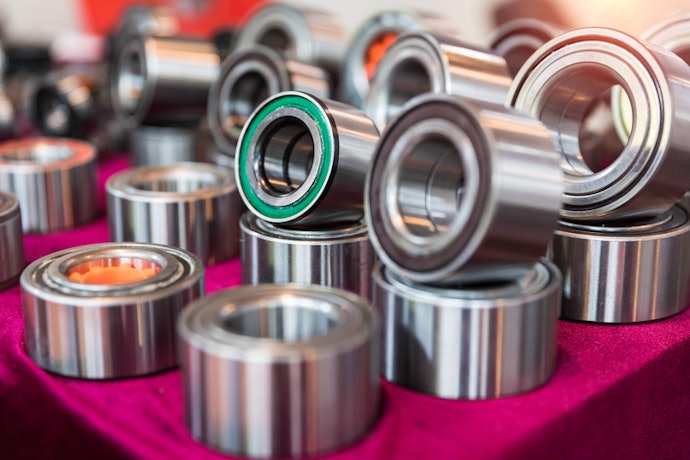
Sleeve bearings are typically used in cheaper case fans. They are usually made with a steel shaft encased in a brass sleeve. They are also quieter than ball bearings but tend to get noisier over time because they wear faster than other bearing types.
Because sleeve bearings are less durable, they are most suitable for low to medium-speed fans. The lifespan of sleeve bearings also ranges from 8,000 to 10,000 hours only. Moreover, they can only be mounted vertically, as they tend to easily fail when installed horizontally.
Ball Bearings Lessen Friction for Longer Operation
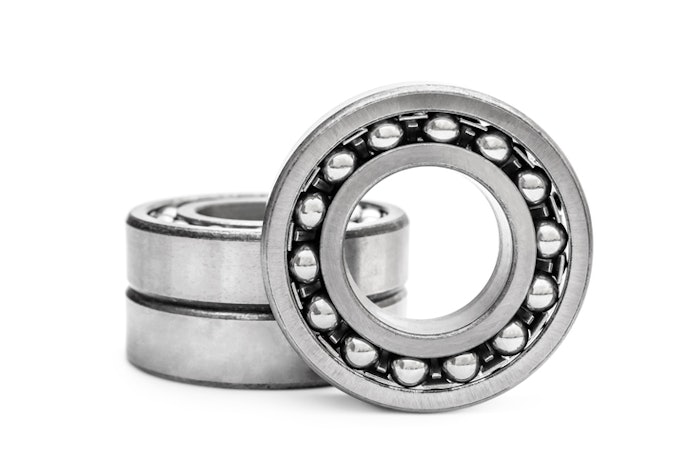
Because of their round metal beads that roll as the fan spins, ball bearings help lessen rotational friction more than other bearing types. This leads to longer operating time. Plus, they can be mounted in any orientation.
One downside is that they are noisier because of the rolling metal balls. They are also pricier than the sleeve and hydraulic bearing types. They have, however, a longer lifespan than sleeve bearings.
Hydraulic Bearings Can be Used in Any Orientation and Are Long-Lasting and Quiet
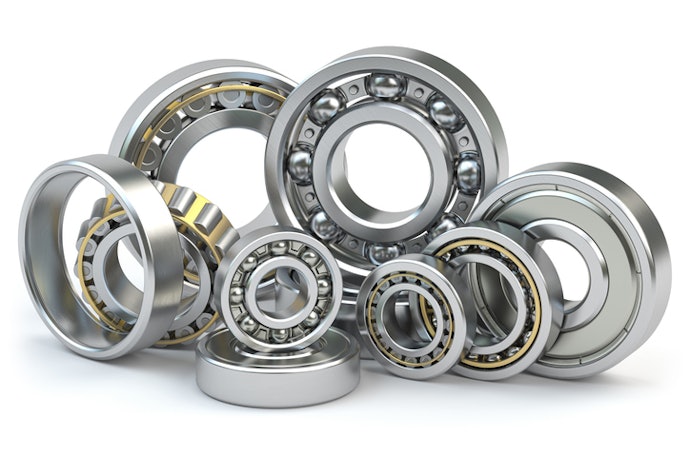
Also known as fluid dynamic bearings, hydraulic bearings are characterized by a herringbone pattern cut in their grooves. They use lubricating fluid and the fan’s rotational force to reduce friction and stabilize the moving parts in your case fan.
Hydraulic bearings combine the long-lasting feature of ball bearings and the low noise level of sleeve bearings. They can also be used in any orientation and are suitable for low- to high-speed fans. They may be on the pricier side, but they are the most cost-efficient option because of these features.
Choose Between 3-Pin or 4-Pin Connectors Depending on Compatibility

Before purchasing a case fan, check if its connector is compatible with your motherboard. There are two common connector types: 3-pin and 4-pin. The first wire in the 3-pin fan is for power, the second is for ground, and the third wire is for a speed sensor. With a 3-pin connector, your computer can recognize the fan speed and adjust it to balance its cooling performance and noise.
The 4-pin connector is essentially the same as the 3-pin one, except it has one additional wire for Pulse Width Modulation (PWM) signal. It is compatible with most modern motherboards and is used to control or adjust the fan’s voltage and speed. Therefore, case fans with a 4-pin connector are pricier than ones with 3-pin connectors.
For More Cooling Power, Go for Case Fans With Higher Airflow and Speed
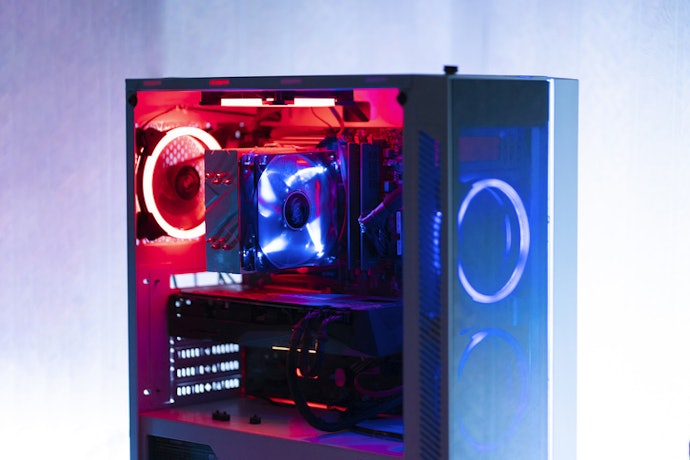
A case fan’s airflow is expressed in cubic feet per minute (CFM). This indicates how much air your case fan can move in a minute. This means that the higher the CFM is, the better the cooling performance it delivers. For budget case fans, the recommended CFM is about 30 CFM and up.
On the other hand, a case fan’s speed is expressed in revolutions per minute (RPM). This indicates how many times the fan makes a complete rotation in one minute; thus the higher RPM, the faster your case fan spins. The recommended RPM, especially if you perform heavy tasks on your PC, is from 1,200 RPM to 1,400 RPM.
If You Prefer Quiet Case Fans, Opt for Ones With a Low Noise Level
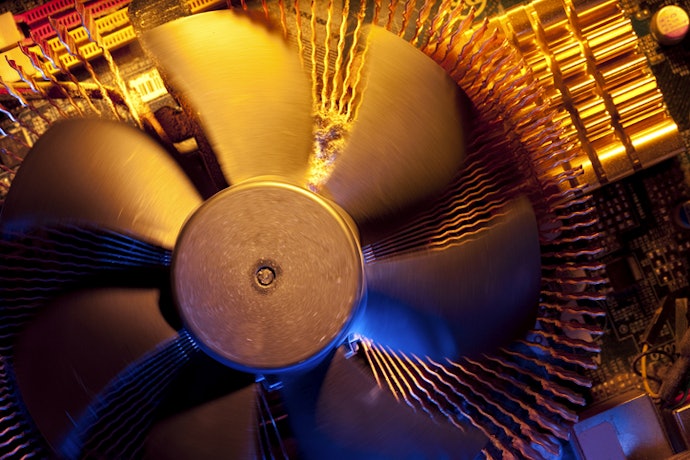
Your case fan’s operating noise can be bothersome at times. Worry not, because there are budget case fans in the market that also sport a low-noise feature.
Case fans’ noise levels are measured in decibels (dBA). The most tolerable and safest option to go for is those that have noise levels that range from 19 dBA to 25 dBA. Just take note that the higher a case fan’s CFM and RPM, the louder its operating noise will be.
10 Best Budget Case Fans to Buy Online
| Products | Image | Click to purchase | Popularity | Details | |||||||
|---|---|---|---|---|---|---|---|---|---|---|---|
Fan Size | Bearing | Connector | Max. Airflow | Max. Speed | Max. Noise Level | Quantity | |||||
1 | PST 120mm Case Fan |P12 Pro Arctic |  | No.1 | 120 × 120 × 25 mm | Fluid Dynamic Bearing (FDB) | 4-Pin | 77 CFM | 600–3000 RPM | 25 dBA | 5 | |
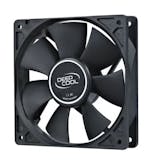
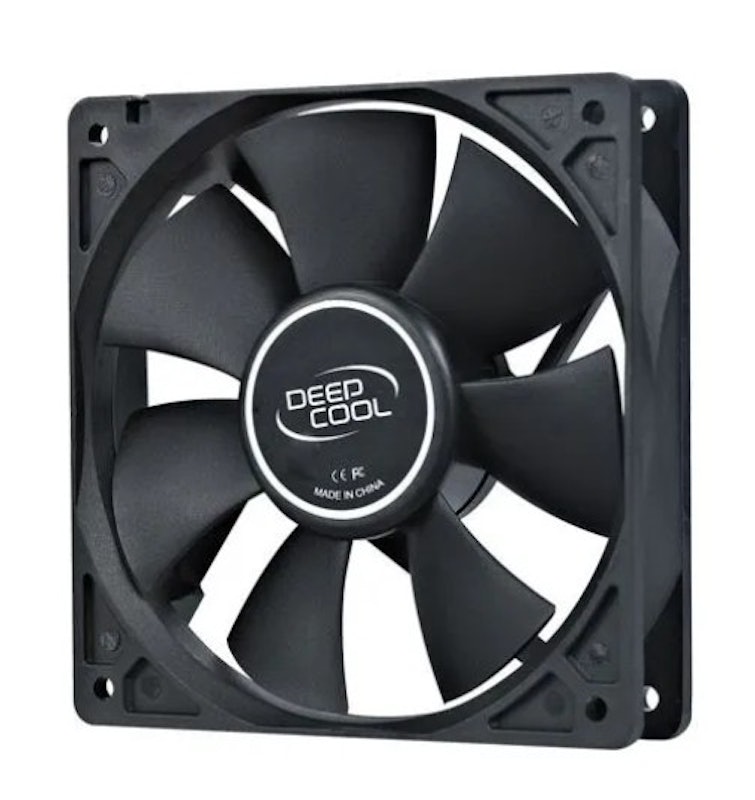
2 | XFAN120 |DP-FDC-XF120 Deepcool |  | No.2 | 120 × 120 × 25 mm | Hydraulic | 3-Pin | 43.56 CFM | 1300 ± 10% RPM | 23.7 dBA | 1 | |
3 | White 3Pack ARGB Fan |TL-C12W-S V3 X3 Thermalright |  | No.3 | 120 × 120 × 25 mm | S-FDB Bearing | 4-Pin, 3-Pin | 66.17 CFM | 1500 RPM ± 10% | 25.6 dBA | 3 | |
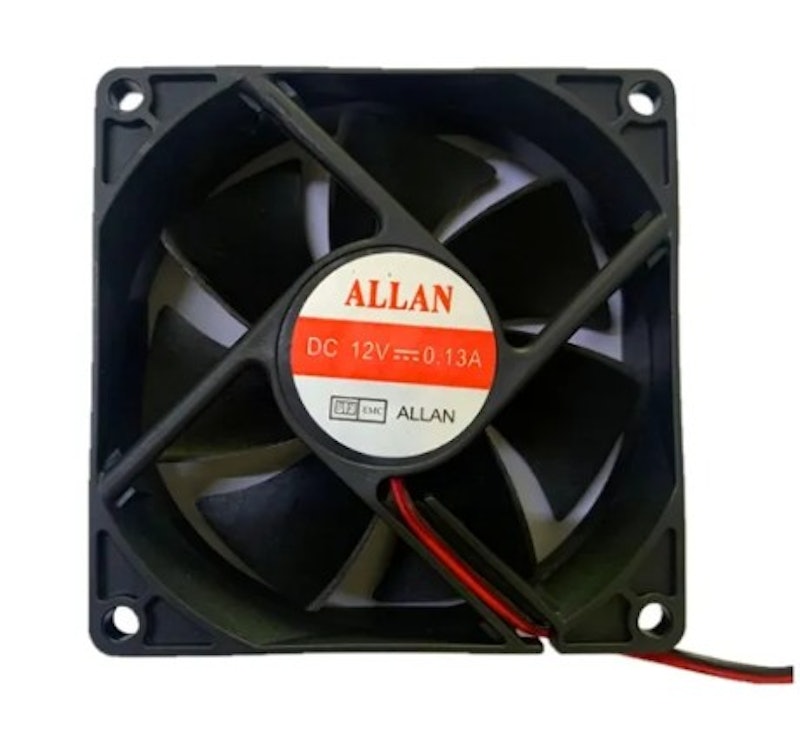
4 | 12V 80mm Cooling Fan Allan |  | No.4 | 80 × 80 × 25 mm | Hydraulic (Oil) | 4-Pin | 26.03 CFM (±10%) | 2200 RPM (±10%) | 25 dBA | 1 | |
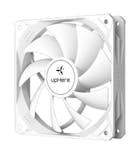
5 | CPU Coolling Fan upHere |  | No.5 | 120 × 120 × 25 mm | Hydraulic | 3-Pin, 4-Pin | 55.13 CFM | 1100 ± 10% RPM | 18 dBA | 1 | |
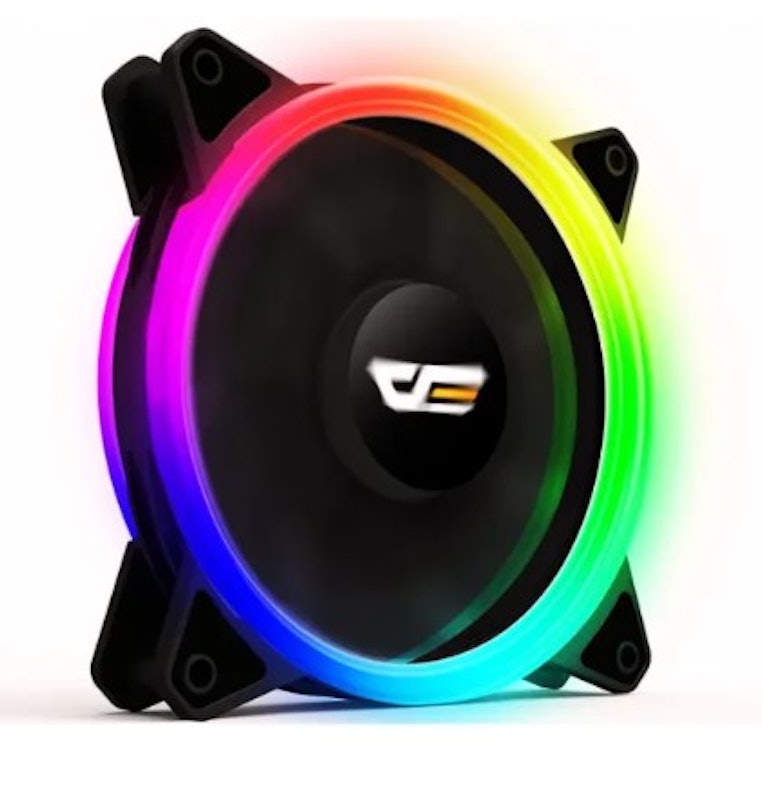
6 | DR12 Pro 3in1 Darkflash |  | No.6 | 120 × 120 × 25 mm | Hydraulic | 6-Pin | 38 CFM | 1200 ±10% RPM | 16 dBA | 3 | |
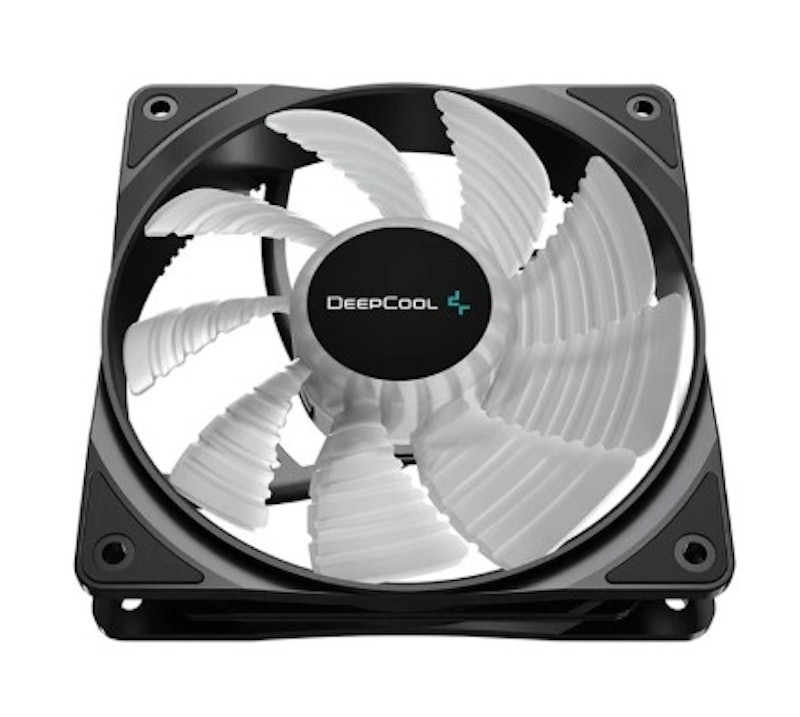
7 | FS RGB LED Fan |DP-FLED3-RF120-FS DeepCool |  | No.7 | 120 × 120 × 25 mm | Hydraulic | 4-Pin | 56.5 CFM | 500~1500 RPM ±10% | ≤27 dBA | 1 | |
8 | ICE Tower V2 Case Fan Inplay |  | No.8 | 120 × 120 × 25 mm | Hydraulic | 6-Pin | 41 CFM | 1350 RPM | 28 dBA | 3 | |
9 | 120mm ARGB Case Fan |TL-M12QR X3 Thermalright |  | No.9 | 120 × 120 × 25 mm | S-FDB | 4-Pin | 47.6 CFM | 1500 RPM ±10% | 23 dBA | 3 | |
10 | Cooling Fan G Storm |  | No.10 | 120 × 120 × 25 mm | Hydraulic | 3-Pin, 4-Pin | 45 CFM | 1200 RPM | 23 dBA | 1 | |


Features and benefits:
Reviews mention:
Several praise the high static pressure for pushing air through thick cooling radiators. Many report the new seven-blade design eliminates the annoying buzzing sound of older models. People appreciate how the rubber dampening pads noticeably lower overall computer case vibrations.
| Fan Size | 120 × 120 × 25 mm |
|---|---|
| Bearing | Fluid Dynamic Bearing (FDB) |
| Connector | 4-Pin |
| Max. Airflow | 77 CFM |
| Max. Speed | 600–3000 RPM |
| Max. Noise Level | 25 dBA |
| Quantity | 5 |
Features and benefits:
Reviews mention:
Many appreciate how quickly and easily it installs into any standard computer chassis. People love the impressive amount of airflow it generates for the low price. Several note the durable build quality ensures reliable performance over many years.
| Fan Size | 120 × 120 × 25 mm |
|---|---|
| Bearing | Hydraulic |
| Connector | 3-Pin |
| Max. Airflow | 43.56 CFM |
| Max. Speed | 1300 ± 10% RPM |
| Max. Noise Level | 23.7 dBA |
| Quantity | 1 |
Thermalright White 3Pack ARGB Fan | TL-C12W-S V3 X3

Features and benefits:
Reviews mention:
People praise the quiet operation even when the fans run at maximum speed. Several appreciate the included daisy-chain cables for effortless, clean cable management. Many note the build quality feels premium despite the highly affordable price.
| Fan Size | 120 × 120 × 25 mm |
|---|---|
| Bearing | S-FDB Bearing |
| Connector | 4-Pin, 3-Pin |
| Max. Airflow | 66.17 CFM |
| Max. Speed | 1500 RPM ± 10% |
| Max. Noise Level | 25.6 dBA |
| Quantity | 3 |
Features and benefits:
Reviews mention:
Several state this compact 80 mm fan keeps their electronics running incredibly cool. Many appreciate how quietly the unit operates even under a heavy load. People report the 12 V motor delivers surprisingly powerful and consistent airflow.
| Fan Size | 80 × 80 × 25 mm |
|---|---|
| Bearing | Hydraulic (Oil) |
| Connector | 4-Pin |
| Max. Airflow | 26.03 CFM (±10%) |
| Max. Speed | 2200 RPM (±10%) |
| Max. Noise Level | 25 dBA |
| Quantity | 1 |

Features and benefits:
Reviews mention:
Many appreciate the straightforward installation process, noting it is easy to mount in most standard computer cases. People find that the fan operates quietly, making it suitable for builds where noise reduction is a priority. Several highlight the solid, practical value of the unit for improving basic airflow in budget-friendly PC setups.
| Fan Size | 120 × 120 × 25 mm |
|---|---|
| Bearing | Hydraulic |
| Connector | 3-Pin, 4-Pin |
| Max. Airflow | 55.13 CFM |
| Max. Speed | 1100 ± 10% RPM |
| Max. Noise Level | 18 dBA |
| Quantity | 1 |
Features and benefits:
Reviews mention:
People like the easy installation process and straightforward hub cable management. Several notice a significant drop in case temperatures after installing these fans. Many value the included remote control for quick color and speed adjustments.
| Fan Size | 120 × 120 × 25 mm |
|---|---|
| Bearing | Hydraulic |
| Connector | 6-Pin |
| Max. Airflow | 38 CFM |
| Max. Speed | 1200 ±10% RPM |
| Max. Noise Level | 16 dBA |
| Quantity | 3 |
DeepCool FS RGB LED Fan | DP-FLED3-RF120-FS
Features and benefits:
Reviews mention:
Some find that the static RGB lighting adds a vibrant aesthetic to their PC build without the need for complex software control. People note that the fans operate quietly under normal workloads, effectively improving airflow within the chassis. Many mention that the simple 4-pin connection makes installation straightforward for both beginners and experienced system builders.
| Fan Size | 120 × 120 × 25 mm |
|---|---|
| Bearing | Hydraulic |
| Connector | 4-Pin |
| Max. Airflow | 56.5 CFM |
| Max. Speed | 500~1500 RPM ±10% |
| Max. Noise Level | ≤27 dBA |
| Quantity | 1 |

Features and benefits:
Reviews mention:
Many note that the airflow keeps their components running remarkably cool under load. People appreciate how incredibly quiet these fans remain even at higher speeds. Several report that the installation process is straightforward and completely hassle-free.
| Fan Size | 120 × 120 × 25 mm |
|---|---|
| Bearing | Hydraulic |
| Connector | 6-Pin |
| Max. Airflow | 41 CFM |
| Max. Speed | 1350 RPM |
| Max. Noise Level | 28 dBA |
| Quantity | 3 |
Thermalright 120mm ARGB Case Fan | TL-M12QR X3

Features and benefits:
Reviews mention:
People appreciate the reverse blade design for maintaining clean aesthetics and airflow. Many report the build quality feels premium and sturdy for the price. Several note the installation process is straightforward and hassle-free for beginners.
| Fan Size | 120 × 120 × 25 mm |
|---|---|
| Bearing | S-FDB |
| Connector | 4-Pin |
| Max. Airflow | 47.6 CFM |
| Max. Speed | 1500 RPM ±10% |
| Max. Noise Level | 23 dBA |
| Quantity | 3 |

Features and benefits:
Reviews mention:
Some find that the vibrant lighting effects provide a significant aesthetic upgrade to budget PC setups. People note that the airflow is sufficient for basic cooling tasks, helping to keep system temperatures stable during light to moderate usage. Many mention that the fans are easy to install, making them a practical and cost-effective choice for those looking to add more color and ventilation to their computer case.
| Fan Size | 120 × 120 × 25 mm |
|---|---|
| Bearing | Hydraulic |
| Connector | 3-Pin, 4-Pin |
| Max. Airflow | 45 CFM |
| Max. Speed | 1200 RPM |
| Max. Noise Level | 23 dBA |
| Quantity | 1 |
Frequently Asked Questions
Below are some of the most asked questions on the web answered by the mybest team.
How Many Fans Should a PC Have?
For low-performance PCs, two case fans should be enough: one intake and one exhaust fan. For high-performance ones like gaming PCs, however, the minimum would be two intake fans and one exhaust fan. You can install the intake fans at the front and the exhaust fan at the back of your PC case for optimal airflow.
Are More Case Fans Better?
Contrary to expectations, more case fans do not mean better cooling. Stacking too many fans will cause an imbalance in airflow, and there might be less cool air to circulate in your PC case. To avoid this, try balancing the exhaust and intake fans instead of installing more fans in your PC.
What's the Best Budget Case With Good Airflow?
The best budget fan cases with great airflow are DEEPCOOL's RGB Case Fan and ID Cooling's Chassis Fan. These two provide a maximum airflow of 56.5 CFM and 62 CFM, respectively. These are on par with more expensive case fans from brands like Noctua and Cooler Master, among others.
Build Your PC With These Affordable Parts and Accessories
With a plethora of computer components and accessories available on the market, building your PC might be quite a challenge. To help you choose the best and most affordable items to equip your custom PC with, browse through these links below!


Author: Kate Basa
Editor: R. Umlas
How We Chose and Ranked Our Product Recommendations
Our buying guide was carefully researched and crafted by the mybest team of writers and editors, in collaboration with the expert featured in this article. We used the buying guide as a basis for choosing and ranking the product recommendations, and we looked at reviews and ratings from different E-commerce sites like Lazada, Shopee, and more.
The descriptions of each product are referenced from content available on manufacturer, brand, and e-commerce sites.