10 Best Kitten Food in the Philippines 2026 | Buying Guide Reviewed by Veterinarian
Not all kitten foods are created equal, and picking the wrong one can affect your kitten's growth during their most critical stage. Whether you have a newly weaned kitten just transitioning to solid food or a growing kitten ready for crunchy kibble, finding the best kitten food for their exact stage can feel overwhelming with so many dry, wet, and specialty formulas available.
To make shopping easier, we consulted veterinarian Dr. Athena Gaffud and put together this buying guide along with a curated list of the best kitten food in the Philippines, all available on Lazada and Shopee.

Dr. Athena Gaffud earned her Doctor of Veterinary Medicine degree from The University of the Philippines Los Baños (UPLB) in 2011. She finished as Top 10 in the class and received the award for the Best Undergraduate Thesis in Large Animals. She became board certified in the same year. She is currently running her own veterinary business and is a part of veterinarians.org as a fact-checker and a remote staff of an Oregon-based animal rehab practice.

Hazel is a content planner and writer dedicated to simplifying your online shopping experience. With a passion for research and a keen eye for quality, she digs into the details to bring you trustworthy and insightful buying guides you can rely on.
The expert oversees the Buying Guide only, and does not determine the products and services featured.
Why You Can Trust Us
Every mybest article is crafted with hours of in-depth research and interviews with experts. Each month, we are continually expanding our database of products based on our research. By emphasizing user insight and reliable information, we deliver trustworthy content to readers.
Feeding Guidelines for Kittens

It is recommended to follow the feeding guidelines provided by the specific kitten food you are using, as they are formulated to meet the nutritional needs of growing cats.
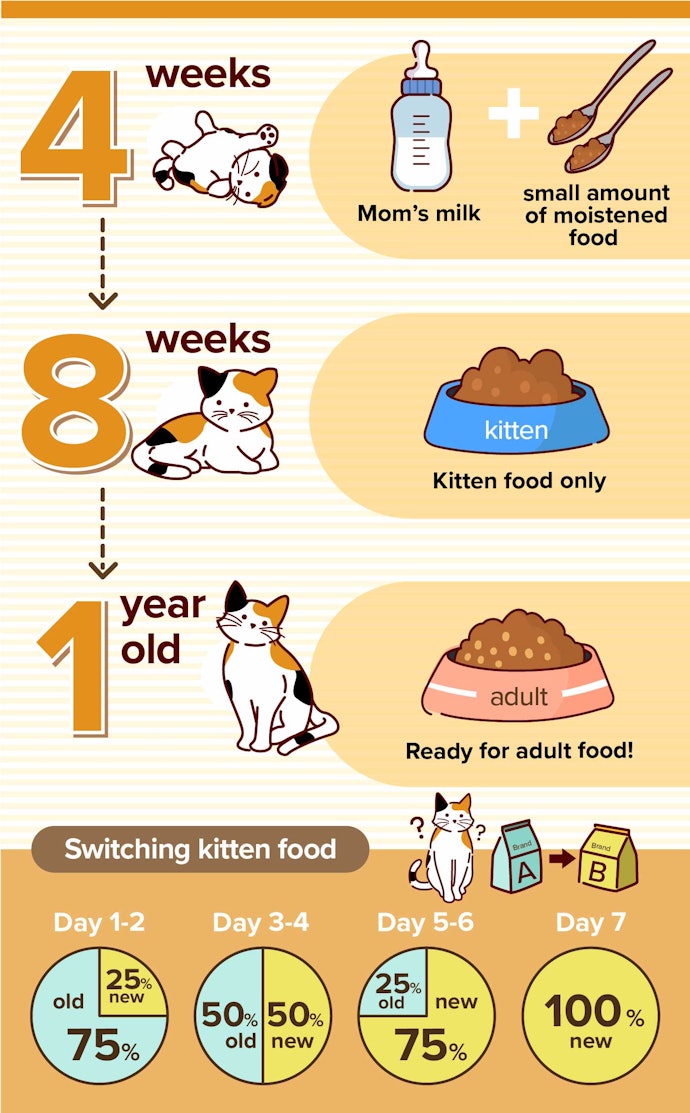
Kittens need age-appropriate feeding schedules and kitten food types to support healthy growth, especially during the early weeks and months.
- Starting Kitten Food: Around 4 weeks old, kittens can begin exploring solid kitten food. Start with small, moistened portions and transition fully by 8 weeks.
- Introducing New Kitten Food: Switching formulas? Go slow. Offer small amounts of the new kitten food alongside the current diet for a few days to a week to prevent tummy troubles.
- Transitioning to Adult Food: By one year old, kittens are ready for adult cat food. Consult your vet for a smooth transition.
Following these stages helps set your kitten up for lifelong healthy eating habits.
How to Choose Kitten Food - Buying Guide
To select a suitable kitten food for your pet, consider several factors such as the nutrient content and formulation. Read more about these below.
Pick a Food Labeled Specifically for Kitten
Adult cats and kittens have different dietary requirements, so it is crucial to choose a food that is particularly for kittens.
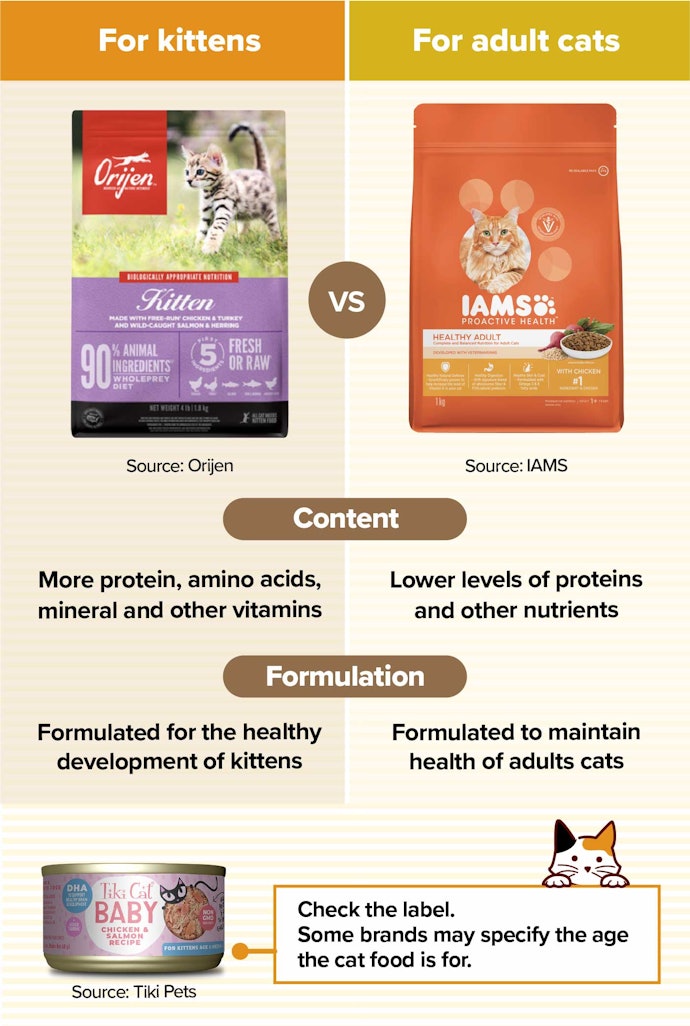
If you just brought home a kitten from a rescue, a breeder, or even a stray you found along your street, check the label before buying kitten food from Lazada or Shopee. Choose products that clearly state they are formulated for kittens, not for adult cats or all life stages.
Growing kittens need more energy and nutrients than adult cats, since their bodies are rapidly developing bones, muscles, and organs. Their digestive systems also process food differently at this stage. Some brands specify the exact age range their formula supports; match this to your kitten's age for best results.
Select a Kitten Food With At Least 26% Protein and 9% Fat for Healthy Growth
Pet owners shopping for the best kitten food should check the guaranteed analysis on the label before adding it to cart. Look for at least 26% crude protein from named sources like chicken or fish, and 9% crude fat, since these fuel muscle development, energy, and a shiny coat during your kuting's rapid growth stage.
Prioritize Named Animal Proteins (Chicken, Fish, Lamb) Listed First on the Kitten Food Label
As obligate carnivores, protein is a cat's primary source of energy. High-quality protein supports proper muscle and bone development.
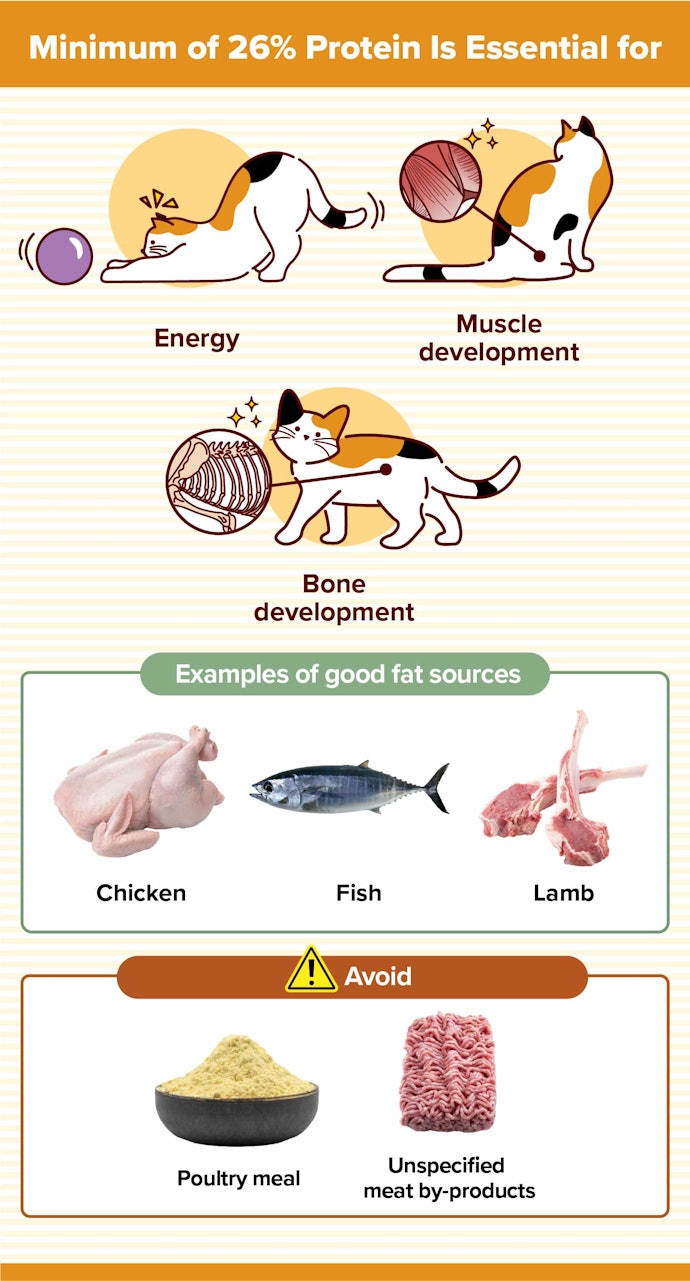
Choose kitten foods that list specific animal proteins, such as chicken, fish, or lamb, as the first ingredient, rather than vague terms like "poultry meal" or "meat by-products." Since ingredients are listed by weight, a named protein at the top means your kitten gets more real meat and naturally occurring amino acids like taurine, which support healthy vision and heart function.
Generic protein sources often contain lower-quality fillers that offer less nutritional value, so reading past the flashy packaging matters for your kitten's long-term health.
Look for Kitten Foods With Fat From Fish, Sunflower, or Chicken Oil
Dietary fat is essential for healthy skin, coat, and brain development.
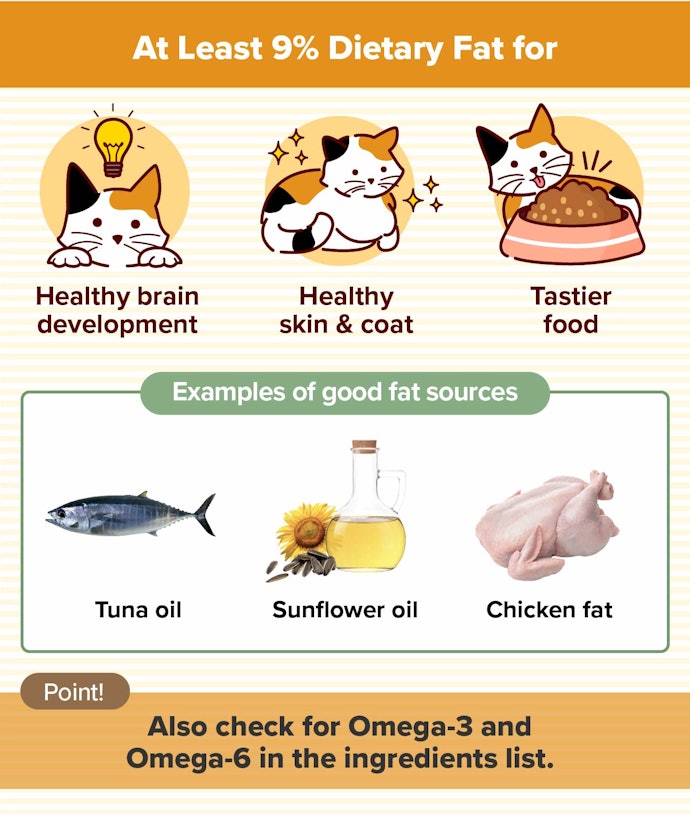
Pet owners choosing between kitten food brands online should check the fat source listed alongside the guaranteed analysis. Pick kitten food formulas containing fish oil, sunflower oil, or chicken fat, ideally rich in omega-3 and omega-6 fatty acids.
These fats do more than add flavor and make food more palatable for picky eaters. They also support your kitten's developing nervous system and cognitive function during a stage when their brain is rapidly forming new connections. Quality fat sources contribute to a soft, shiny coat, too, which is often one of the first visible signs of good nutrition.
Choose Between Wet or Dry Kitten Foods Based on Your Pet’s Age and Water Intake
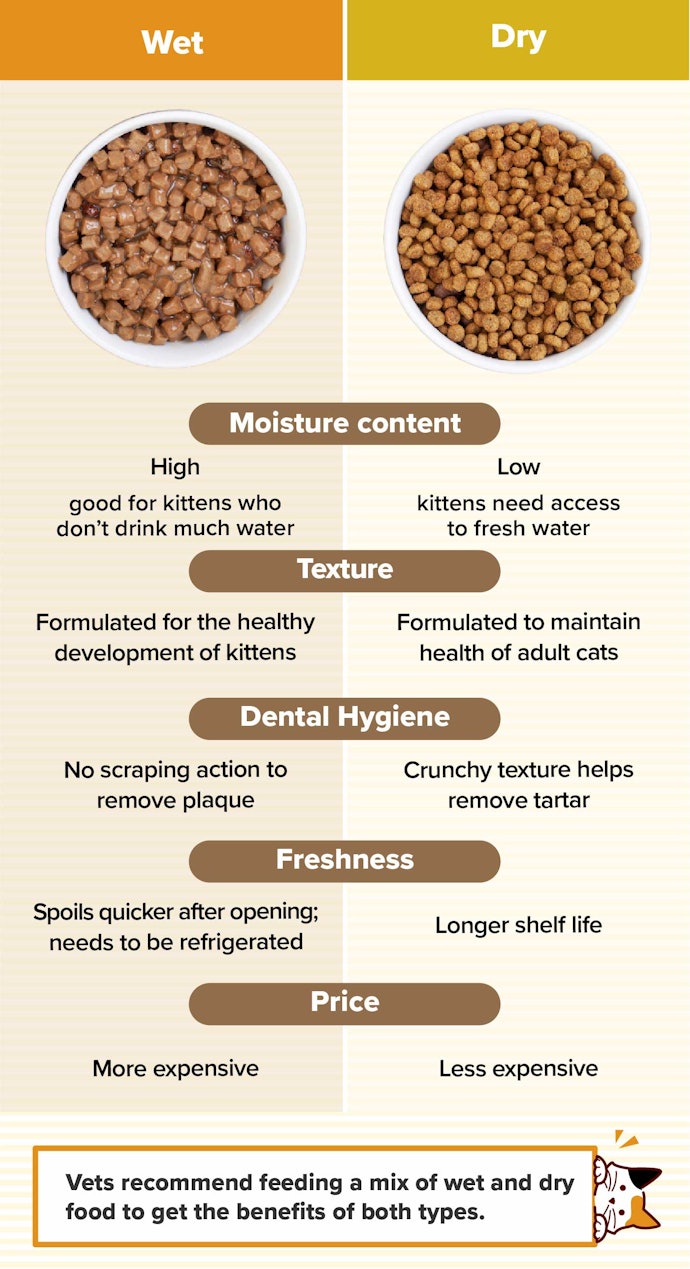
Both wet and dry food can suit kittens, but the right choice depends on their age, chewing ability, and hydration needs. Veterinarians recommend a mix of both: wet kitten food keeps them hydrated, and dry kitten food offers other benefits.
Wet Kitten Food: For Kittens Under 8 Weeks or Kittens That Don't Drink Much Water
When kittens do not get enough water, wet food is preferred to prevent dehydration and other clinical problems.
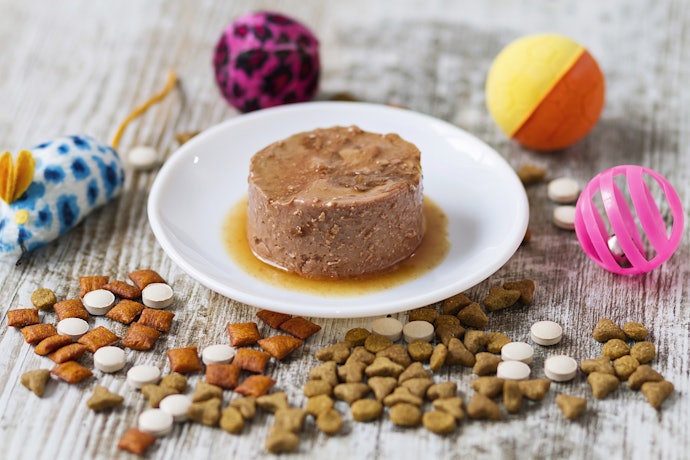
Very young kittens or cats that seem uninterested in their water bowl should consider wet kitten food as a staple rather than an occasional treat. Look for kitten foods in gravy, mousse, or jelly form, since these carry a much higher moisture content than dry kibble.
Tiny kittens also lack the full set of teeth needed to chew dry food properly, making wet kitten food easier and safer to eat during this stage. Keep in mind that wet kitten food spoils faster once opened and tends to cost more per serving, so factor this into your budget and feeding routine.
Canned food has the longest shelf life if it has not been opened yet. However, once opened, the unused portion should be refrigerated to prevent spoilage and maintain quality.
To increase the palatability of refrigerated cat food, you may reheat it to increase its aroma, which may encourage the cat to eat more, especially a sick cat.
Dry Kitten Food: For Kittens With a Full Set of Teeth
The texture helps mechanical cleansing of tooth surfaces.
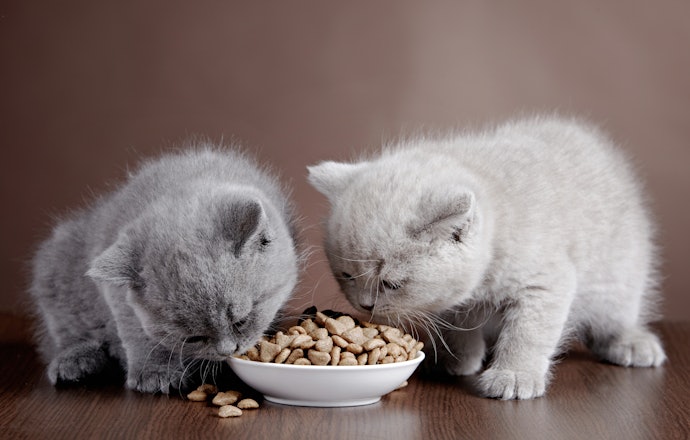
Kittens who have already grown their full set of teeth can start incorporating dry kitten food into their daily meals. Choose kibble sized appropriately for small mouths, which many Lazada and Shopee listings specify for kitten foods.
The crunchy texture encourages your pet to chew thoroughly rather than gulp their kitten food, and this repeated chewing naturally scrapes away plaque buildup before it hardens into tartar. Just make sure fresh water is always within reach, since dry kitten food contains far less moisture than wet varieties.
Dry food's texture also stimulates saliva production, aiding in the digestion and overall satisfaction of the kittens.
Opt for a Single-Protein, Limited-Ingredient Kitten Food if Your Pet Has a Sensitive Stomach
LID formulas contain a reduced number of ingredients, which can be beneficial for cats that are prone to food sensitivities or allergies.
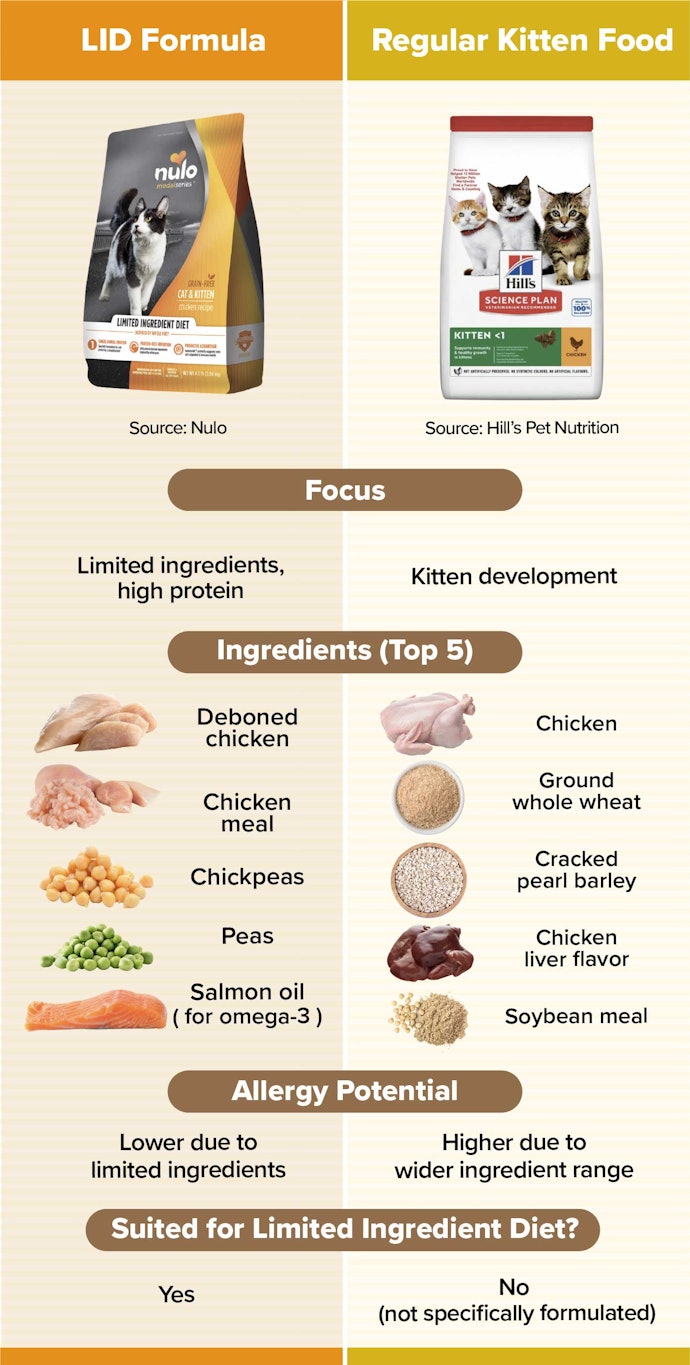
If your kitten is showing signs of an upset tummy, itchy skin, or frequent loose stools after meals, they may benefit from a limited ingredient diet (LID) kitten food. Choose formulas built around a single novel protein like duck, rabbit, or lamb instead of the more common chicken, beef, or fish that tend to trigger reactions.
Fewer ingredients mean fewer potential allergens for your kitten's developing digestive system to react to, making it easier to pinpoint the exact cause if sensitivities persist. Many LID kitten foods available on Lazada and Shopee also include prebiotics to further support gut health.
Although LID can be helpful for kittens with sensitive stomachs, keep in mind that consulting your veterinarian is crucial.
Every kitten is unique, and your vet can help determine the health status of your kitten and give personalized recommendations.
Avoid Kitten Foods With Corn, Wheat, or Cellulose as Primary Fillers, Regardless of Type
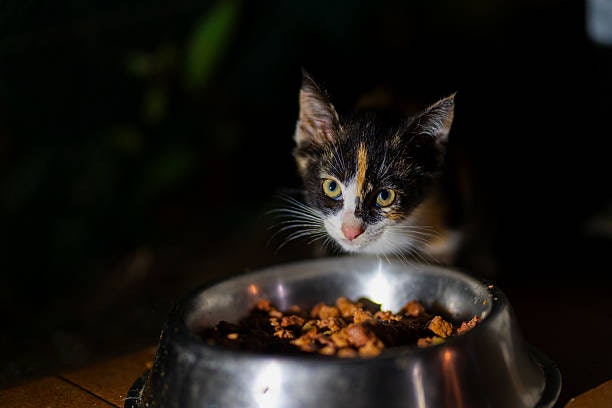
Double-check the kitten food’s ingredients list for cheap fillers before finalizing a purchase online. Skip formulas where corn, wheat, or cellulose appear near the top, since this signals the kitten food relies on bulk rather than real nutrition.
As obligate carnivores, kittens are simply not built to break down grains efficiently, so these fillers often pass through mostly undigested. Over time, a filler-heavy diet can leave your kitten undernourished despite eating full portions, while also increasing the likelihood of gas, bloating, or irregular bowel movements that no fur parent wants to deal with.
These ingredients provide little nutritional value and can contribute to poor digestion.
10 Best Kitten Food to Buy Online
| Products | Image | Click to purchase | Popularity | Details | |||||||||||
|---|---|---|---|---|---|---|---|---|---|---|---|---|---|---|---|
Specifically Formulated for Kittens | Protein | Fats | Carbohydrates | Protein Source | Fat Source | Carbohydrate Source | With Taurine | Vitamins and Minerals | Type | Net Weight | |||||
1 | Kitten Salmon and Turkey Carnilove |  | No.1 | 40% | 20% | 20% | Chicken、Salmon、Turkey | Salmon Oil | Peas、Tapioca Starch | Vitamin A, Vitamin D3, Vitamin E, Vitamin C, Zinc, Iron, Copper, Selenium | Dry | 2 kg | |||
2 | Mother & Babycat Dry Cat Food Royal Canin |  | No.2 | 34% | 25% | 1.9% | Animal Fats | Fish Oil | Wheat Gluten | Vitamin A, Vitamin D3, Vitamin E, Vitamin C, Iron | Dry | 400g | |||
3 | Premium Wet Cat Food Brit |  | No.3 | 9.5% | 5% | unknown | Chicken | Fish Oil | unknown | Vitamin D3, Vitamin E, Zinc, Manganese, Copper, Iodine, Biotin | Wet | 85g | |||
4 | Wild Prairie Kitten and Cat Dry Cat Food Acana |  | No.4 | 37% | 18% | 22% | Chicken、Turkey、Meat and Animal Derivatives | Fish Oil | Peas、Whole Green Lentils, Beans | Vitamin B Complex, Vitamin E, Zinc, Copper | Dry | 1.8 kg | |||
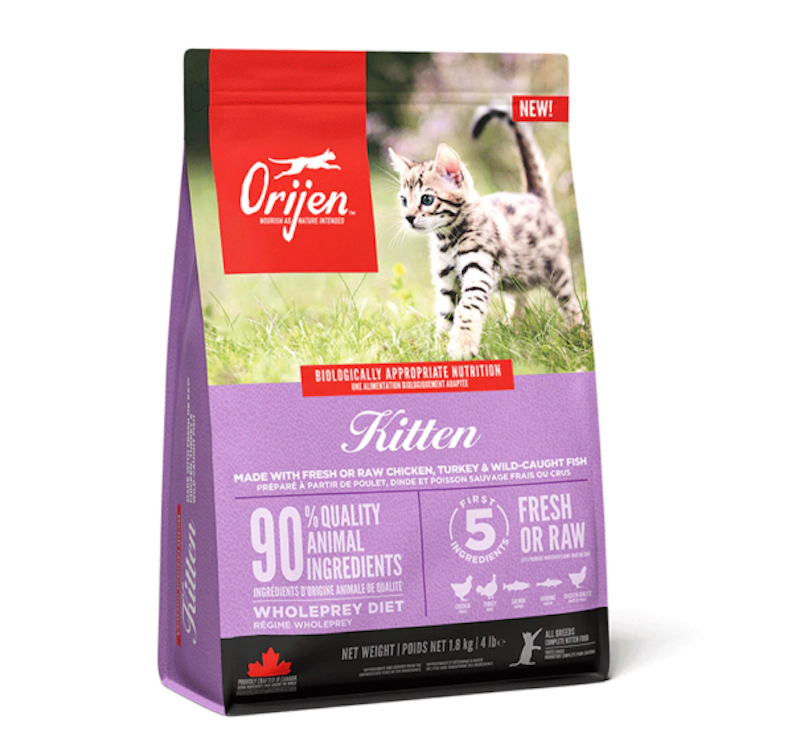
5 | Kitten Dry Cat Food Orijen |  | No.5 | 40% | 20% | 3% | Chicken、Salmon、Turkey、Herring | Fish Oil、Sunflower Seed Oil、Salmon Oil | Peas、Whole Green Lentils、Pumpkin | Vitamin B Complex, Vitamin E, Zinc, Copper | Dry | 1.8 kg | |||
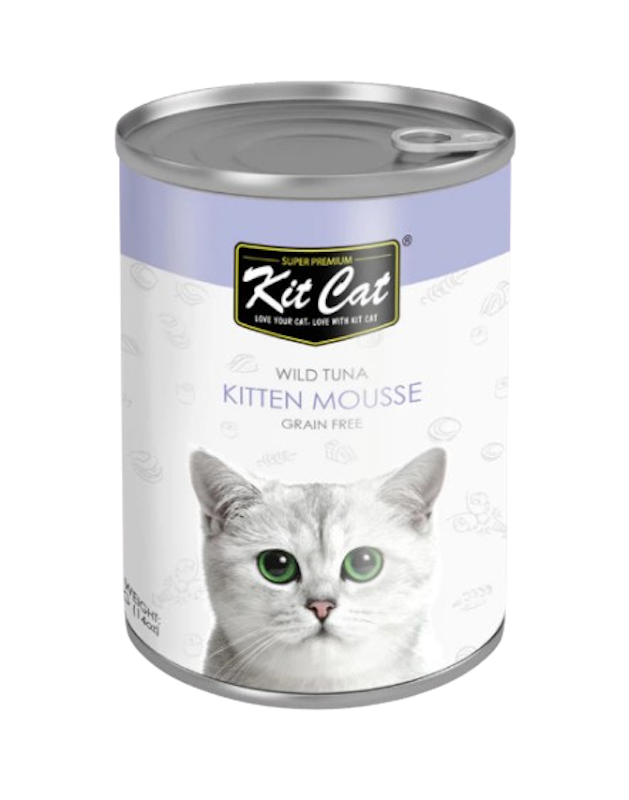
6 | Grain-Free Kitten Mousse Wet Cat Food Kit Cat |  | No.6 | 6% | 2.5% | unknown | Tuna | Fish Oil、Soybean Oil | unknown | Vitamin E | Wet | 400g | |||
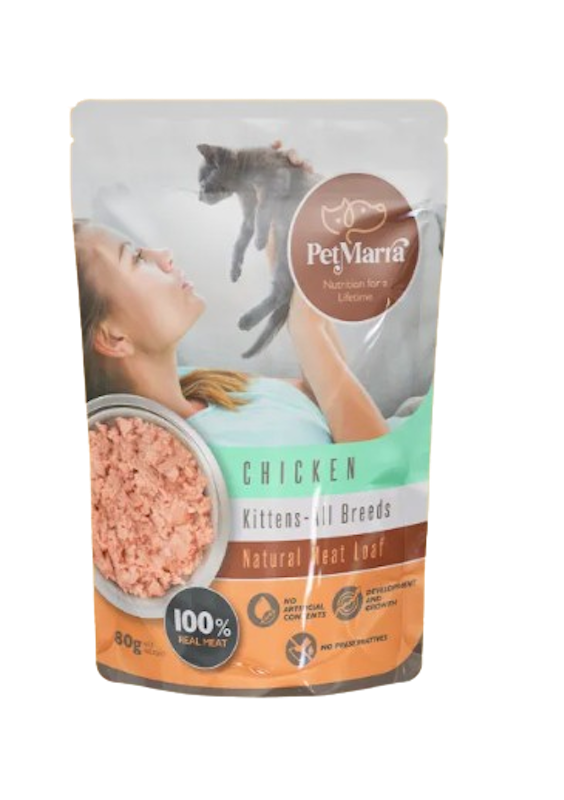
7 | Natural Meat Loaf Kitten Wet Food Pouch PetMarra |  | No.7 | 5.5% | 1.5% | unknown | Meat and Meat By-Products (Frozen Chicken) | unknown | Grain | unknown | unknown | Wet | 80g | ||
8 | Elite Kitten and Mother Cat Maxime |  | No.8 | 34% | 16% | unknown | Poultry Meal and Fish Meal | Fish Oil、Poultry Fat | Rice、Wheat | Vitamin A, Vitamin D, Vitamin E, Vitamin K, Vitamin B1, Vitamin B2, B12, Vitamin B5, Calcium, Phosphorus, Potasssium, Sodium Chloride, Magnesium, Iron, Copper, Manganese, Zinc, Iodine, Selenium | Dry | 1 kg | |||
9 | Tuna in Jelly Kitten Wet Food Pouch SmartHeart |  | No.9 | 10% | 1.5% | unknown | Tuna | Fish Oil | unknown | Vitamin E, Vitamin D | Wet | 85g | |||
10 | Cat Canned Wet Food Petsup |  | No.10 | 10% | 4% | 1% | Chicken、Salmon、Tuna | Fish Oil | Carrots、Pumpkin | Vitamin A, Vitamin D, Vitamin E, Vitamin B Complex, Minerals | Wet | 85g | |||


Reviews mention:
Users appreciate the perfect balance of salmon and turkey, noting that their kittens enjoy the taste and variety. Many highlight that this formula offers the highest protein and fat content compared to other well-known brands, supporting healthy growth and energy. Some mention the product has a strong scent, which is worth considering for those sensitive to smells. Overall, reviews praise the high-quality ingredients and suitability for kittens with sensitive digestion, with noticeable improvements in coat condition and vitality.
| Specifically Formulated for Kittens | |
|---|---|
| Protein | 40% |
| Fats | 20% |
| Carbohydrates | 20% |
| Protein Source | Chicken、Salmon、Turkey |
| Fat Source | Salmon Oil |
| Carbohydrate Source | Peas、Tapioca Starch |
| With Taurine | |
| Vitamins and Minerals | Vitamin A, Vitamin D3, Vitamin E, Vitamin C, Zinc, Iron, Copper, Selenium |
| Type | Dry |
| Net Weight | 2 kg |

Reviews mention:
Filipino buyers on Lazada and Shopee praise its role in keeping litters energetic and mothers strong, with many noting shiny coats and steady weight gain in kittens. Some mention kittens love the rehydrated form during weaning, though a few suggest mixing with wet food to avoid pickiness in fussy eaters. Overall, users appreciate value for larger bags but occasionally note higher cost compared to basic brands.
| Specifically Formulated for Kittens | |
|---|---|
| Protein | 34% |
| Fats | 25% |
| Carbohydrates | 1.9% |
| Protein Source | Animal Fats |
| Fat Source | Fish Oil |
| Carbohydrate Source | Wheat Gluten |
| With Taurine | |
| Vitamins and Minerals | Vitamin A, Vitamin D3, Vitamin E, Vitamin C, Iron |
| Type | Dry |
| Net Weight | 400g |

Reviews mention:
Filipino cat owners on Lazada and Shopee praise its palatability, noting even fussy felines devour it daily for breakfast routines. Some appreciate the value in multipacks but suggest mixing with dry food to extend pouch life amid occasional reports of quick depletion. A few mention softer stools initially that normalize with consistent use.
| Specifically Formulated for Kittens | |
|---|---|
| Protein | 9.5% |
| Fats | 5% |
| Carbohydrates | unknown |
| Protein Source | Chicken |
| Fat Source | Fish Oil |
| Carbohydrate Source | unknown |
| With Taurine | |
| Vitamins and Minerals | Vitamin D3, Vitamin E, Zinc, Manganese, Copper, Iodine, Biotin |
| Type | Wet |
| Net Weight | 85g |
AcanaWild Prairie Kitten and Cat Dry Cat Food

Reviews mention:
Many cat owners say their pets love the taste and often choose this food over others, even preferring it to wet food in some cases. The kibble size is generally considered perfect for kittens and suitable for most cats, making it easy for young and small cats to enjoy. While Acana is recognized as one of the pricier options in stores, reviewers consistently mention that the premium ingredients, visible improvements in coat and energy, and the absence of fillers make it worth the investment.
| Specifically Formulated for Kittens | |
|---|---|
| Protein | 37% |
| Fats | 18% |
| Carbohydrates | 22% |
| Protein Source | Chicken、Turkey、Meat and Animal Derivatives |
| Fat Source | Fish Oil |
| Carbohydrate Source | Peas、Whole Green Lentils, Beans |
| With Taurine | |
| Vitamins and Minerals | Vitamin B Complex, Vitamin E, Zinc, Copper |
| Type | Dry |
| Net Weight | 1.8 kg |
Reviews mention:
Users appreciate the high-quality ingredients and how well it supports kitten growth and health. Several reviewers also share that this food is helpful for adult cats with poor appetites or those who are picky eaters, as its rich flavor and smaller kibble size encourage better eating habits even in older cats.
| Specifically Formulated for Kittens | |
|---|---|
| Protein | 40% |
| Fats | 20% |
| Carbohydrates | 3% |
| Protein Source | Chicken、Salmon、Turkey、Herring |
| Fat Source | Fish Oil、Sunflower Seed Oil、Salmon Oil |
| Carbohydrate Source | Peas、Whole Green Lentils、Pumpkin |
| With Taurine | |
| Vitamins and Minerals | Vitamin B Complex, Vitamin E, Zinc, Copper |
| Type | Dry |
| Net Weight | 1.8 kg |
Kit CatGrain-Free Kitten Mousse Wet Cat Food
Reviews mention:
Owners praise its smooth texture that kittens eagerly devour, noting improved hydration in picky eaters. Some highlight better litter habits from the urinary benefits. A few mention occasional stock issues on Lazada but appreciate the value for grain-free quality.
| Specifically Formulated for Kittens | |
|---|---|
| Protein | 6% |
| Fats | 2.5% |
| Carbohydrates | unknown |
| Protein Source | Tuna |
| Fat Source | Fish Oil、Soybean Oil |
| Carbohydrate Source | unknown |
| With Taurine | |
| Vitamins and Minerals | Vitamin E |
| Type | Wet |
| Net Weight | 400g |
PetMarraNatural Meat Loaf Kitten Wet Food Pouch
Reviews mention:
Pet owners love how kittens eagerly consume the soft, palatable texture, noting improved appetite in picky eaters. Some mention it's suitable for all life stages in multi-cat homes, though a few seek more independent reviews beyond seller claims. No major concerns like digestive issues appear in feedback.
| Specifically Formulated for Kittens | |
|---|---|
| Protein | 5.5% |
| Fats | 1.5% |
| Carbohydrates | unknown |
| Protein Source | Meat and Meat By-Products (Frozen Chicken) |
| Fat Source | unknown |
| Carbohydrate Source | Grain |
| With Taurine | unknown |
| Vitamins and Minerals | unknown |
| Type | Wet |
| Net Weight | 80g |
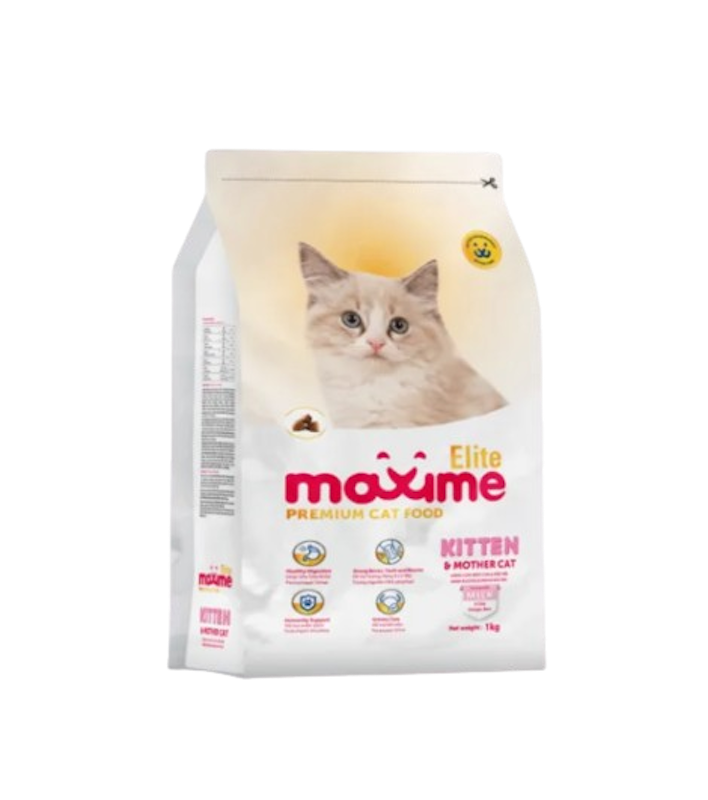
Reviews mention:
Buyers praise its palatability, noting kittens and mothers eagerly consume the milk-flavored kibble for steady growth. Some mention softer stools initially during transition but appreciate value for larger packs. A few suggest mixing with wet food for picky eaters.
| Specifically Formulated for Kittens | |
|---|---|
| Protein | 34% |
| Fats | 16% |
| Carbohydrates | unknown |
| Protein Source | Poultry Meal and Fish Meal |
| Fat Source | Fish Oil、Poultry Fat |
| Carbohydrate Source | Rice、Wheat |
| With Taurine | |
| Vitamins and Minerals | Vitamin A, Vitamin D, Vitamin E, Vitamin K, Vitamin B1, Vitamin B2, B12, Vitamin B5, Calcium, Phosphorus, Potasssium, Sodium Chloride, Magnesium, Iron, Copper, Manganese, Zinc, Iodine, Selenium |
| Type | Dry |
| Net Weight | 1 kg |
SmartHeartTuna in Jelly Kitten Wet Food Pouch

Reviews mention:
Pet owners highlight that even stray or newly rescued kittens adjust to this flavor with little to no hesitation, making feeding transitions smoother. Several appreciate that the jelly holds its shape well and doesn’t turn watery over time, keeping the texture more appealing in the bowl. Others observe signs of stronger immunity, with kittens appearing more resilient and needing fewer vet visits over time.
| Specifically Formulated for Kittens | |
|---|---|
| Protein | 10% |
| Fats | 1.5% |
| Carbohydrates | unknown |
| Protein Source | Tuna |
| Fat Source | Fish Oil |
| Carbohydrate Source | unknown |
| With Taurine | |
| Vitamins and Minerals | Vitamin E, Vitamin D |
| Type | Wet |
| Net Weight | 85g |

Reviews mention:
Cat owners consistently report that their pets love the taste and eagerly rush to their bowls at mealtime. Many notice improvements in their cats’ coats, with shinier fur and increased energy, while digestion issues are rarely a concern. The variety of flavors helps keep cats interested and excited for each meal.
| Specifically Formulated for Kittens | |
|---|---|
| Protein | 10% |
| Fats | 4% |
| Carbohydrates | 1% |
| Protein Source | Chicken、Salmon、Tuna |
| Fat Source | Fish Oil |
| Carbohydrate Source | Carrots、Pumpkin |
| With Taurine | |
| Vitamins and Minerals | Vitamin A, Vitamin D, Vitamin E, Vitamin B Complex, Minerals |
| Type | Wet |
| Net Weight | 85g |
Frequently Asked Questions Answered by Veterinarian
Below are some of the most asked questions on the web answered by veterinarian Dr. Athena Gaffud.
What Are Foods That Kittens Can’t Consume?
Kittens and adult cats can't eat other pet food, chocolate, dairy, caffeine, avocado, alcohol-containing food, grapes, garlic, onion, chives, or citrus.
Can I Use Cat Treats as Kitten Food?
No. Treats can't be used as kitten food because they aren't balanced and complete.
How Much Kitten Food Should I Give My Pet?
Young kittens may eat ¼ to ½ cup of kitten food at a time. Depending on the formulation, follow the kitten food manufacturer's feeding instructions. Based on your kitten’s Body Condition Score, level of activity, and metabolism, you may discuss with your vet the necessary adjustments to meet your kitten's nutritional needs.
More Treats for Your Feline Baby
With all the love and cuteness our cats bring to our lives, it's just natural to want to repay them by nurturing and taking care of them. Check out and stock up on these feline essentials that will surely earn a purr from your muning.


How We Chose and Ranked Our Product Recommendations
Our buying guide was carefully researched and crafted by the mybest team of writers and editors, in collaboration with the expert featured in this article. We used the buying guide as a basis for choosing and ranking the product recommendations, and we looked at reviews and ratings from different E-commerce sites like Lazada, Shopee, and more.
The descriptions of each product are referenced from content available on manufacturer, brand, and e-commerce sites.