10 Best Stethoscopes in the Philippines 2026 | Buying Guide Reviewed by a Doctor
The right stethoscope can make the difference between catching a subtle heart murmur and missing it entirely. Whether you're a nursing student building your first clinical toolkit or a general practitioner seeing patients daily, finding one that matches your role, budget, and work environment matters more than most realize.
Below, we break down which type suits your needs, then point you to the exact models on our list that fit each case. From affordable acoustic stethoscopes on Lazada and Shopee to specialized cardiology models, this guide draws on insights from family medicine specialist Dr. Eron Tan to help you choose confidently.

Dr. Tan is a Family and Occupational Medicine doctor and college faculty member with expertise in clinical care, preventive medicine, and evidence-based practice. With a strong background in primary and secondary care, research, and community-oriented primary care, he simplifies complex health topics for readers. His experience in occupational health provides insights into workplace well-being and safety, ensuring health-related decisions are grounded in research and reliable medical knowledge.

Hazel is a content planner and writer dedicated to simplifying your online shopping experience. With a passion for research and a keen eye for quality, she digs into the details to bring you trustworthy and insightful buying guides you can rely on.
The expert oversees the Buying Guide only, and does not determine the products and services featured.
Why You Can Trust Us
Every mybest article is crafted with hours of in-depth research and interviews with experts. Each month, we are continually expanding our database of products based on our research. By emphasizing user insight and reliable information, we deliver trustworthy content to readers.
How to Choose a Stethoscope - Buying Guide
Choosing the right stethoscope can significantly improve your ability to perform accurate, comfortable patient assessments. Whether you're a student, general practitioner, or specialist, it's important to consider factors such as stethoscope type, sound-clarity features, durability, and user comfort.
Start by Choosing the Right Stethoscope Type for Your Work
If you're a nursing student, GP, or specialist practicing at a Metro Manila hospital or a rural health unit, start by matching your stethoscope type to your daily caseload. Choose acoustic for general use, cardiology for detailed heart sounds, electronic for noisy wards, or pediatric for younger patients.
For Medical Students or General Practitioners: Opt for an Acoustic Stethoscope

Acoustic stethoscopes are popular with students and GPs for their balance of price, durability, and sound quality.

Medical students prepping for clinical rotations and general practitioners handling walk-in consultations both do well with an acoustic stethoscope as their go-to choice. Opt for a reliable model like the Littmann Classic III, which balances affordability with dependable sound quality for everyday use.
These stethoscopes don't rely on batteries, so they hold up well through long shifts at busy clinics or barangay health centers. Look for one with solid ambient noise rejection, since this feature can help you pick up subtle sounds even in less-than-quiet exam rooms.
For Specialists Who Do Detailed Heart or Lung Examinations: Look for a Cardiology Stethoscope
Cardiology stethoscopes offer enhanced sound amplification and noise reduction, helping detect subtle murmurs and abnormal heart sounds.

Cardiologists, pulmonologists, and specialists conducting detailed heart or lung examinations need more than a standard stethoscope to catch what matters. Look for a cardiology stethoscope designed for precise auscultation in demanding clinical settings.
These models use advanced tubing and chestpiece construction to deliver sharper acoustic performance than general-practice stethoscopes, making it easier to distinguish between similar sounds during a busy shift in a Metro Manila cardiac unit or ICU. This level of detail matters most when diagnosing complex conditions like valve abnormalities, where missing a faint sound could delay proper treatment.
If You Work in Noisy Environments or Need Sound Amplification: Look for an Electronic Stethoscope
Electronic stethoscopes help reduce noise and are useful in teaching settings and for those who need amplified sound or digital recordings.

Healthcare workers stationed in busy ERs or crowded hospitals and clinics often struggle to hear clearly with a standard stethoscope. Look for an electronic stethoscope, which uses built-in amplification to boost heart and lung sounds above the surrounding noise. This makes a real difference during hectic shifts where ambulance sirens, chatter, and equipment beeps can drown out subtle findings.
Electronic models also enable practitioners with hearing difficulties to continue working confidently, as the amplified output compensates for reduced sensitivity. For clinical instructors, some electronic stethoscopes support connecting multiple headsets, making it easier to teach auscultation techniques to students during bedside rounds.
For Doctors Who Treat Babies, Infants, and Young Children: Use a Pediatric or Infant Stethoscope
Stethoscopes for children and infants have smaller chestpieces tuned for higher-pitched sounds and smaller anatomy.

Pediatricians, neonatologists, and family doctors who regularly examine babies, infants, and young children need a stethoscope built for smaller patients. Use a pediatric or infant stethoscope, which fits comfortably against a small chest without losing contact or accuracy.
Standard adult chestpieces are often too large to properly seal against a baby's ribcage, which can muffle sounds and lead to missed findings during checkups at a lying-in clinic or newborn nursery. Choosing a dedicated pediatric model also helps young patients feel less startled during exams, since a smaller, gentler chestpiece is less intimidating than a full-sized adult stethoscope.
Choose the Right Chestpiece Based on the Types of Examinations You Perform
Practitioners who examine a wide range of patients, from routine checkups to complex cases, should pay attention to the chestpiece configuration next. This choice determines how well you can detect the full range of heart and lung sounds during any given consultation.
For Quick, Routine Checkups: Choose a Single-Head Stethoscope
Single-head stethoscopes are lighter, easier to use, and often more affordable. They may also include tunable diaphragms for added versatility.

School clinic nurses, occupational health staff, and doctors handling high-volume routine checkups benefit most from a single-head stethoscope. Choose this simplified design when speed and ease of use matter more than switching between multiple sound modes.
With just one diaphragm, these stethoscopes are lighter and less bulky, making them comfortable to wear during back-to-back consultations or long barangay health mission days. Many single-head models are also budget-friendly, which makes them a practical pick for students still building their clinical toolkit. Just keep in mind that without a bell, some low-frequency sounds may be harder to detect during closer diagnostic work.
For General Examinations That Require Both High- and Low-Frequency Sounds: Pick a Dual-Head Stethoscope
Dual-head stethoscopes offer both diaphragm and bell for detecting high- and low-frequency sounds, ideal for general practice.

General practitioners and family medicine doctors seeing a broad mix of cases each day should reach for a dual-head stethoscope. Pick this configuration when your daily caseload shifts between routine breath sounds and closer cardiac or vascular checks, since it gives you both a diaphragm and a bell in one chestpiece.
This versatility means you can move from listening to lung sounds to catching a possible heart murmur without needing to swap tools mid-exam. For doctors working across different departments in a busy Philippine hospital or private clinic, this flexibility often makes the dual-head design the more practical everyday choice.
Look for Features That Improve Sound Quality in Your Work Environment
Doctors and nurses working in varied clinical settings, from quiet private clinics to noisy public hospital wards, should also weigh sound clarity features before buying. These directly affect how clearly you hear patient sounds in real conditions.
If You Need to Switch Frequencies Without Flipping the Chestpiece, Look for a Tunable Diaphragm
Tunable diaphragms let you hear different frequencies by adjusting pressure—light pressure for low sounds and firm pressure for high ones.

Clinicians who need to move quickly between low and high-frequency sounds during a single examination should look for a stethoscope with a tunable diaphragm. Choose this feature when you want to streamline your workflow without pausing to flip or switch chestpieces mid-exam.
This is especially useful for doctors managing heart failure or valve disease cases, where subtle shifts between S3 or S4 gallops and higher-pitched valve clicks need quick, accurate detection. For busy practitioners in Philippine hospitals juggling a full patient load, this small feature can meaningfully speed up each consultation without sacrificing diagnostic accuracy.
If You Work In Noisy or High-Traffic Clinics, Go for Dual-Lumen Tubing
Dual-lumen tubing eliminates noise from tubing friction and enhances sound clarity. It’s especially helpful in busy or noisy clinical settings.

Anyone practicing in high-traffic public hospitals, crowded outpatient departments, or busy emergency rooms should go for a stethoscope with dual-lumen tubing. Look for this feature when your work environment makes it hard to isolate patient sounds from background noise and general clinic activity.
Standard single-tube designs can pick up friction noise as the tubing rubs against clothing or shifts during movement, adding unwanted interference to what you're trying to hear. Dual-lumen tubing separates the sound pathways within, reducing friction noise.
If You Need Fast Frequency Switching During Exams, Pick a Pressure-Sensitive Stethoscope
Pressure-sensitive models streamline exams by letting you shift between frequency ranges without repositioning the chestpiece.

Those handling a high volume of patients each day, especially in fast-paced OPD settings or busy rural health units, benefit most from a pressure-sensitive stethoscope. Pick this type when you need to assess a patient's condition on the fly without pausing to reposition or flip the chestpiece between checks.
The design responds to how firmly you press it against the skin, mimicking either a bell or a full diaphragm, depending on the pressure applied. This adaptability is especially useful in complex cases that require frequent switching between sound ranges, helping you move through consultations more efficiently.
Opt for Stainless Steel Chestpieces and Non-Stick Tubing if You Use Your Stethoscope Daily in the Philippines
Stainless steel and non-stick tubing resist wear, making them ideal for the Philippines' humid climate with heat and moisture.

If you wear your stethoscope daily across long clinic hours or hospital shifts, prioritize durable, climate-appropriate materials. Opt for a stethoscope with a stainless steel chestpiece and non-stick, latex-free tubing, since these materials hold up better against constant handling and cleaning.
The Philippines' tropical climate, with its year-round heat and humidity, accelerates wear on standard rubber tubing, causing it to crack or degrade more quickly. Choosing stainless steel and non-stick tubing helps your stethoscope last longer, even with frequent alcohol wipe-downs and exposure to skin oils. Store it away from direct sunlight to further protect its lifespan.
Look for Adjustable Headsets and Angled, Soft-Sealing Eartips if You Wear Your Stethoscope Through Long Shifts
Comfort features like soft ear tips, angled binaurals, and adjustable headsets help prevent fatigue and improve sound seal, especially during long shifts.

Hospital staff and clinic personnel who spend long shifts wearing their stethoscope, whether during 12-hour hospital duty or back-to-back consultations, need comfort features that matter just as much as sound quality. Look for a model with an adjustable headset, angled binaurals, and soft-sealing eartips before checking out.
Soft eartips mold to your ear canal for a snug fit that blocks ambient noise, while angled binaurals sit naturally along the ear's shape for better sound transmission. Together, these features reduce strain on your ears and temples over extended hours, letting you stay focused on patient care.
10 Best Stethoscopes to Buy Online
| Products | Image | Click to purchase | Popularity | Details | |||||||
|---|---|---|---|---|---|---|---|---|---|---|---|
Type | Material | Chestpiece Configuration | Tunable Diaphragm | Lumen Tubing | Pressure-Sensitive | Comfort Features | |||||
1 | Classic III Stethoscope 3M Littmann |  | No.1 | Acoustic | Stainless Steel | Dual-head | Single | Soft-Sealing Eartips, Adjustable Headset, Non-Chill Rim, Latex-Free Tubing | |||
2 | Cardiology IV Stethoscope |6152 3M Littmann |  | No.2 | Cardiology | Stainless Steel | Dual-head | Dual | Soft-Sealing Eartips, Adjustable Headset, Non-Chill Rim, Latex-Free Tubing | |||
3 | Stethoscope Dual Head Partners |  | No.3 | Acoustic | Aluminum Binaural, Lightweight Chestpiece | Dual-head | Single | Standard Ear Tips, Flexible Tubing | |||
4 | Cardio Stethoscope Topcare |  | No.4 | Cardiology | Stainless Steel Binaurals; Medical-Grade PVC Tubing | Dual-head | Single | Soft-Sealing Eartips, Noise-Reducing Tubing, Non-Chill Rim, Comfortable Headset | |||
5 | Kenxin Stethoscope|KX3104 Indoplas |  | No.5 | Acoustic | Stainless Steel | Single-head | Single | Standard Ear Tips, Flexible Tubing, Comfortable Headset | |||
6 | MD One Stainless Steel Stethoscope MDF Instruments |  | No.6 | Acoustic, Pediatric | Stainless Steel | Dual-head | Dual | ComfortSeal Silicone Eartips, Adjustable ErgonoMax Headset, Latex-Free Tubing | |||
7 | Acoustica Lightweight Stethoscope MDF Instruments |  | No.7 | Acoustic | Aluminium | Dual-head | Dual | ErgonoMax Headset, Flexible Latex-Free Tubing, Comfortable Eartips | |||
8 | Kenxin Stethoscope|KX3106 Indoplas |  | No.8 | Acoustic | Stainless Steel | Single-head | Single | Standard Ear Tips, Flexible Tubing, Lightweight Design | |||
9 | Adscope 603 Clinician Series Stethoscope ADC |  | No.9 | Acoustic | Stainless Steel Chestpiece and Binaurals, 22" PVC Tubing | Dual-head | Single | Soft-Sealing Adsoft Plus Eartips, Non-Chill Rim, Adjustable Headset, Flexible Tubing | |||
10 | Stethoscope Deluxe BAXTEL |  | No.10 | Acoustic | Aluminum Alloy Chestpiece with Medical-Grade PVC Tubing | Dual-head | Single | Soft-Sealing Eartips, Non-Chill Rim, Anatomically Designed Headset, Flexible Tubing | |||


| Type | Acoustic |
|---|---|
| Material | Stainless Steel |
| Chestpiece Configuration | Dual-head |
| Tunable Diaphragm | |
| Lumen Tubing | Single |
| Pressure-Sensitive | |
| Comfort Features | Soft-Sealing Eartips, Adjustable Headset, Non-Chill Rim, Latex-Free Tubing |
3M LittmannCardiology IV Stethoscope | 6152

| Type | Cardiology |
|---|---|
| Material | Stainless Steel |
| Chestpiece Configuration | Dual-head |
| Tunable Diaphragm | |
| Lumen Tubing | Dual |
| Pressure-Sensitive | |
| Comfort Features | Soft-Sealing Eartips, Adjustable Headset, Non-Chill Rim, Latex-Free Tubing |
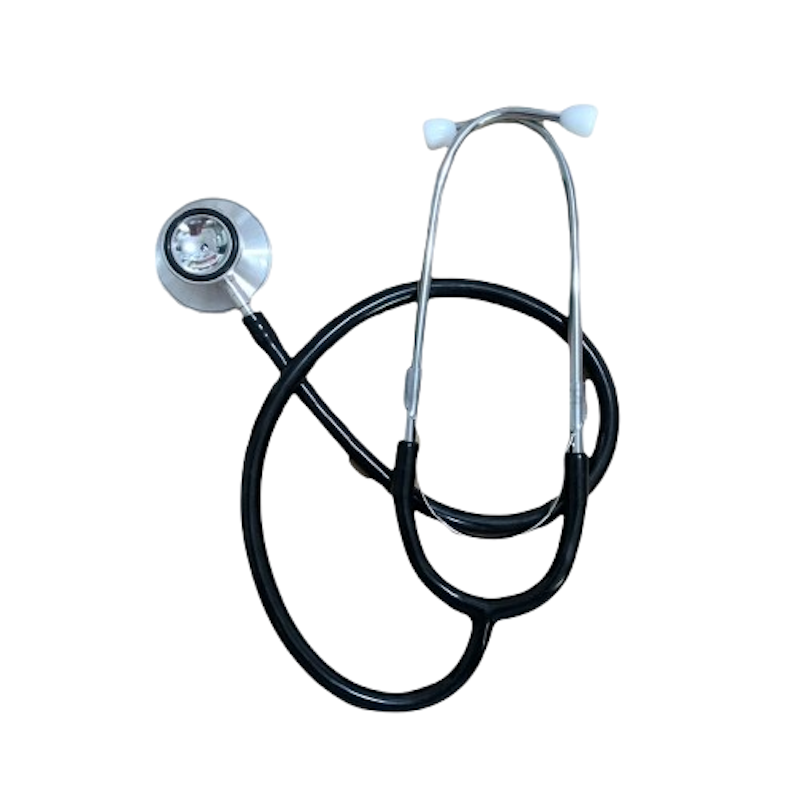
| Type | Acoustic |
|---|---|
| Material | Aluminum Binaural, Lightweight Chestpiece |
| Chestpiece Configuration | Dual-head |
| Tunable Diaphragm | |
| Lumen Tubing | Single |
| Pressure-Sensitive | |
| Comfort Features | Standard Ear Tips, Flexible Tubing |

| Type | Cardiology |
|---|---|
| Material | Stainless Steel Binaurals; Medical-Grade PVC Tubing |
| Chestpiece Configuration | Dual-head |
| Tunable Diaphragm | |
| Lumen Tubing | Single |
| Pressure-Sensitive | |
| Comfort Features | Soft-Sealing Eartips, Noise-Reducing Tubing, Non-Chill Rim, Comfortable Headset |
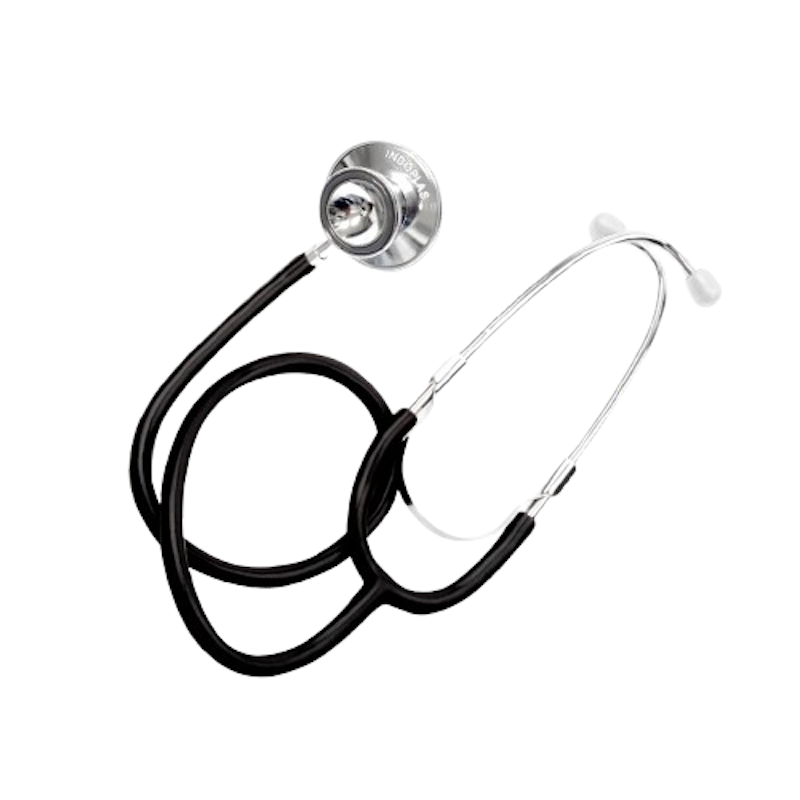
| Type | Acoustic |
|---|---|
| Material | Stainless Steel |
| Chestpiece Configuration | Single-head |
| Tunable Diaphragm | |
| Lumen Tubing | Single |
| Pressure-Sensitive | |
| Comfort Features | Standard Ear Tips, Flexible Tubing, Comfortable Headset |
MDF Instruments MD One Stainless Steel Stethoscope
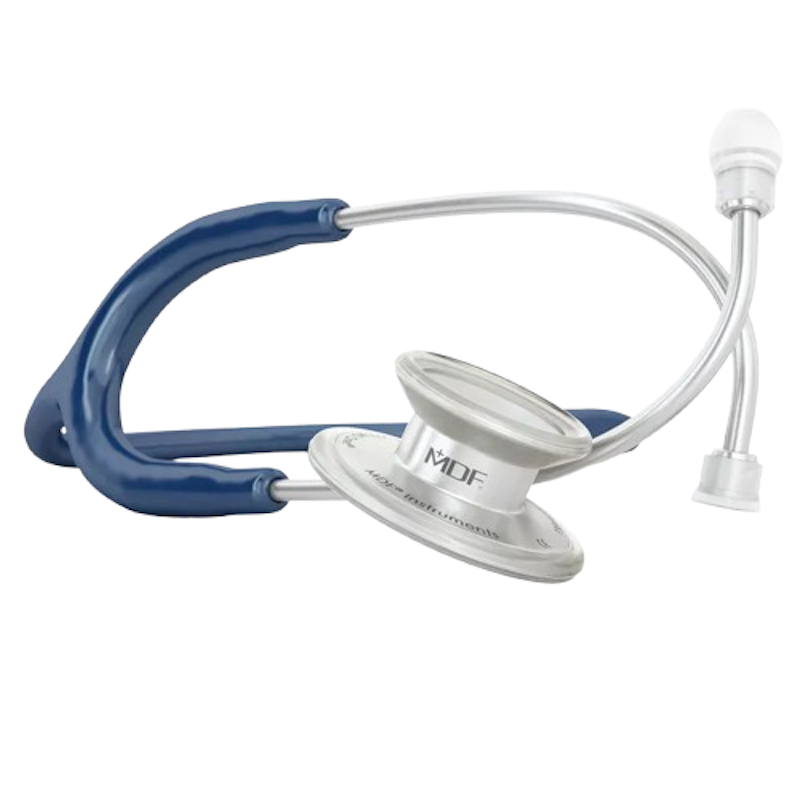
| Type | Acoustic, Pediatric |
|---|---|
| Material | Stainless Steel |
| Chestpiece Configuration | Dual-head |
| Tunable Diaphragm | |
| Lumen Tubing | Dual |
| Pressure-Sensitive | |
| Comfort Features | ComfortSeal Silicone Eartips, Adjustable ErgonoMax Headset, Latex-Free Tubing |
MDF Instruments Acoustica Lightweight Stethoscope
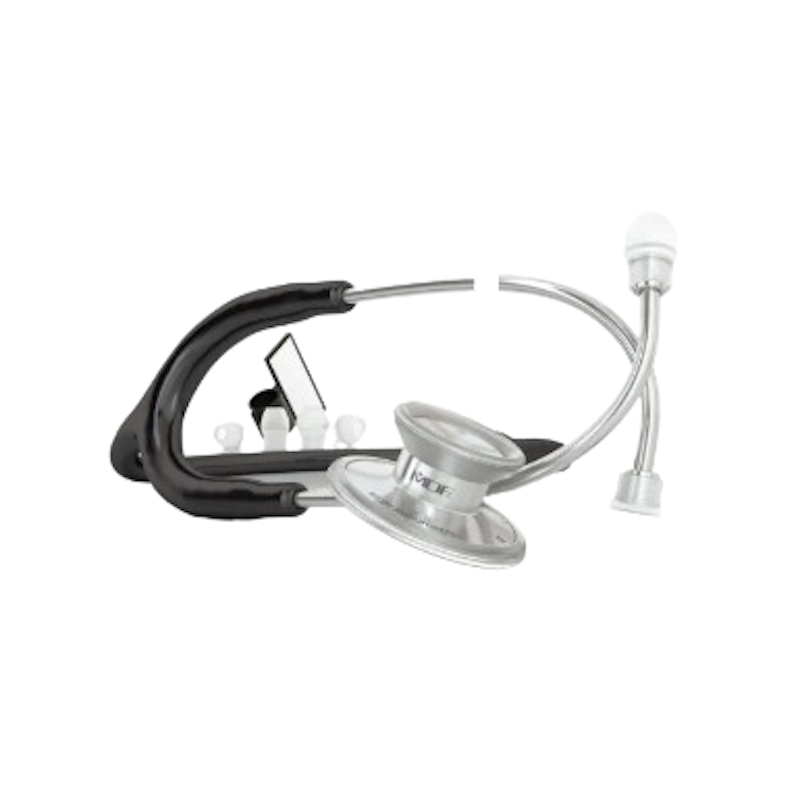
| Type | Acoustic |
|---|---|
| Material | Aluminium |
| Chestpiece Configuration | Dual-head |
| Tunable Diaphragm | |
| Lumen Tubing | Dual |
| Pressure-Sensitive | |
| Comfort Features | ErgonoMax Headset, Flexible Latex-Free Tubing, Comfortable Eartips |
Indoplas Kenxin Stethoscope | KX3106
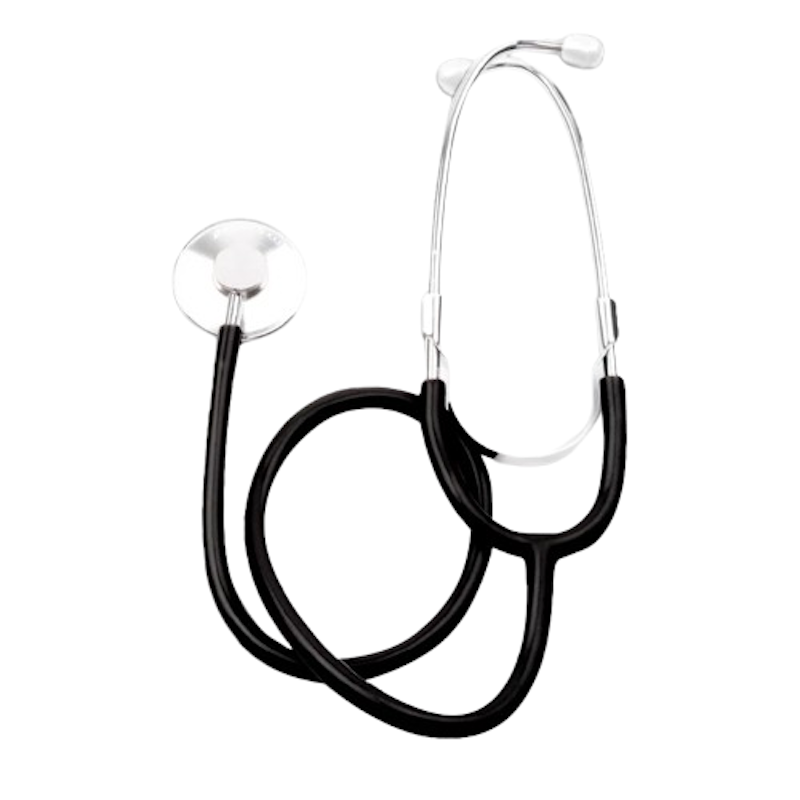
| Type | Acoustic |
|---|---|
| Material | Stainless Steel |
| Chestpiece Configuration | Single-head |
| Tunable Diaphragm | |
| Lumen Tubing | Single |
| Pressure-Sensitive | |
| Comfort Features | Standard Ear Tips, Flexible Tubing, Lightweight Design |
ADC Adscope 603 Clinician Series Stethoscope
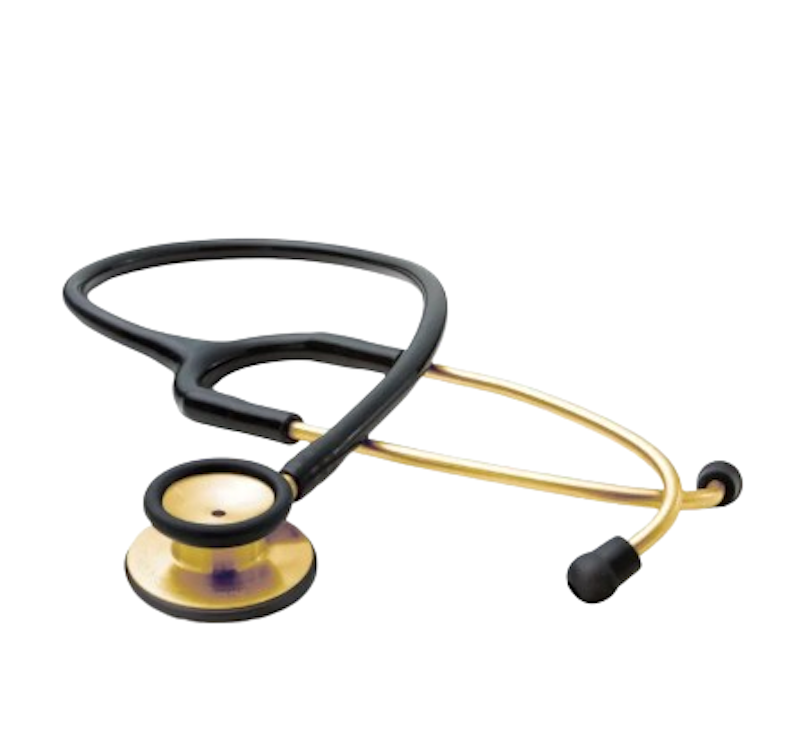
| Type | Acoustic |
|---|---|
| Material | Stainless Steel Chestpiece and Binaurals, 22" PVC Tubing |
| Chestpiece Configuration | Dual-head |
| Tunable Diaphragm | |
| Lumen Tubing | Single |
| Pressure-Sensitive | |
| Comfort Features | Soft-Sealing Adsoft Plus Eartips, Non-Chill Rim, Adjustable Headset, Flexible Tubing |
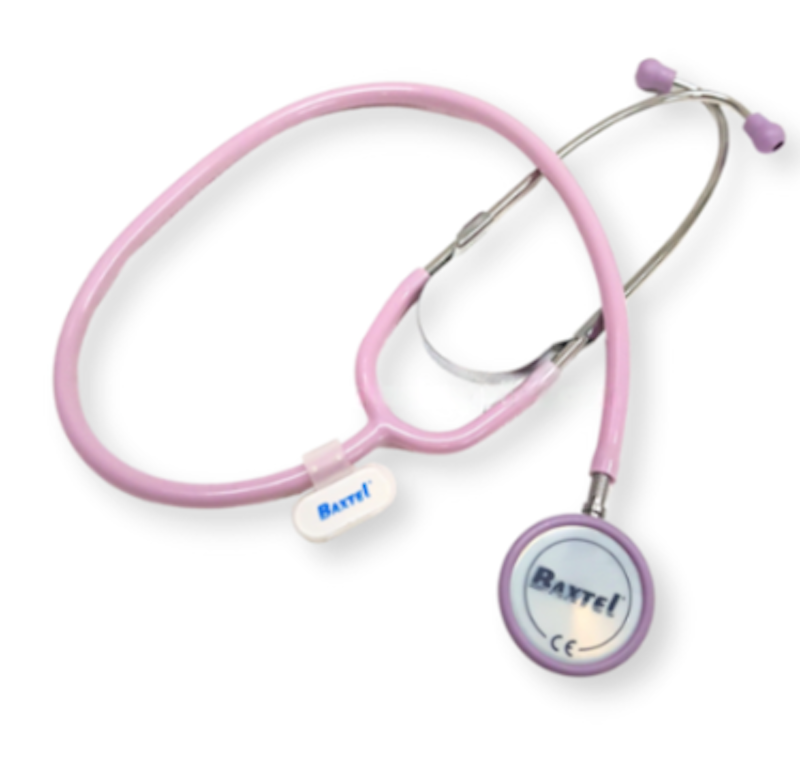
| Type | Acoustic |
|---|---|
| Material | Aluminum Alloy Chestpiece with Medical-Grade PVC Tubing |
| Chestpiece Configuration | Dual-head |
| Tunable Diaphragm | |
| Lumen Tubing | Single |
| Pressure-Sensitive | |
| Comfort Features | Soft-Sealing Eartips, Non-Chill Rim, Anatomically Designed Headset, Flexible Tubing |
Frequently Asked Questions
Below, Dr. Eron Tan answers some of the most frequently asked questions about stethoscopes.
How Should a Stethoscope Be Cleaned and Maintained Properly?
- Clean the stethoscope daily using a soft cloth or alcohol wipe to remove dirt and bacteria.
- Avoid using hand sanitizers for cleaning, as some contain additives that can damage the tubing and other components.
- Keep the stethoscope away from direct sunlight and extreme temperatures to prevent the tubing from cracking or degrading—especially important in the humid Philippine climate.
- Regularly inspect the stethoscope for signs of wear, such as stiff tubing or loose parts.
- Store the stethoscope in a cool, dry place when not in use to preserve its materials and acoustic performance.
- Replace worn-out parts, such as eartips and diaphragms, as needed to maintain hygiene and sound quality.
How Much Should You Spend on a Stethoscope?
For students and general use, a stethoscope in the ₱500 to ₱2,000 range is usually sufficient. If you're a practicing healthcare professional who performs frequent or detailed auscultation, investing in a higher-end model with better acoustics and durability may be worthwhile.
Can a Stethoscope Detect Heart Problems?
A stethoscope can help healthcare professionals identify abnormal heart sounds, such as murmurs or irregular rhythms, but it cannot diagnose heart conditions on its own. Additional tests, such as an electrocardiogram (ECG) or echocardiogram, are often needed to confirm a diagnosis.
Check Out Other Health Device Buying Guides


How We Chose and Ranked Our Product Recommendations
Our buying guide was carefully researched and crafted by the mybest team of writers and editors, in collaboration with the expert featured in this article. We used the buying guide as a basis for choosing and ranking the product recommendations, and we looked at reviews and ratings from different E-commerce sites like Lazada, Shopee, and more.
The descriptions of each product are referenced from content available on manufacturer, brand, and e-commerce sites.