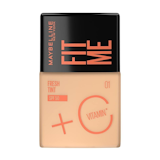
We Wore Sola Foundation Primer for Two Full Days on Oily Skin. Here's Where the 3-in-1 Claim Holds Up (and Where It Doesn't)
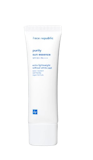
Sola Foundation Primer is one of those easy 3-in-1 bases: skin tint, primer, and sunscreen in one step. It sounds like the perfect shortcut for a quick daily skin fix, especially on busy days.
But does the glow last, or turn oily by lunch? Is the coverage enough? And can you really trust it as your sunscreen? We wore it for two full days to find out. We also asked Dr. Benett Gloriani, a Hair Restoration Specialist & Aesthetic Physician, to weigh in on the sunscreen and skin-science side of what we found.
Disclaimer: Dr. Bennet Gloriani did not personally test this product. She was asked to share her expert opinion on the sunscreen and skin-science side of what we found, based on her professional expertise as a Hair Restoration Specialist & Aesthetic Physician. Her participation should not be taken as an endorsement or recommendation of this specific product
Sola Foundation Primer Test Review

Issa has been part of mybest since 2020. She's an impulsive buyer at heart who still asks sulit ba talaga before believing the hype.
TL;DR: Reliable Coverage and Glow, Falls Short as Sunscreen
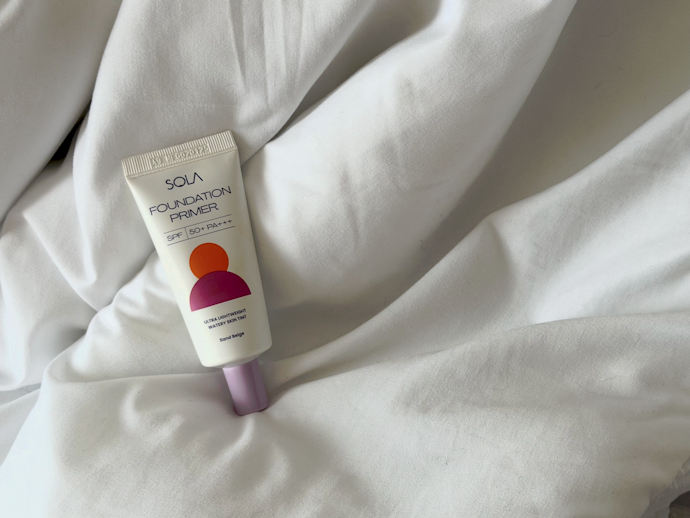
As a lightweight, glowy everyday base, Sola is genuinely good. As a sunscreen is where the 3-in-1 promise gets shaky, and for a surprising reason: a little already gives real coverage, so you naturally use a thin layer, and a thin layer is not enough to trust as your only SPF.
- The good: blends with bare fingers, feels lightweight, has a light-to-medium coverage that hides redness and dark spots, and the shade matched after settling with no oxidation.
- The catch: by the 4-hour mark, the T-zone and sides of the nose start to shine, so you'll need to blot.
Our honest opinion:
Get it if you want an easy, glowy everyday base, and you do not mind blotting. Skip it if you need full coverage, matte oil control, or a sunscreen you can fully rely on.
How We Tested Sola Foundation Primer
Tested by Issa (mybest PH team), oily-combination skin, wears a light everyday base daily.
We bought Sola ourselves, not sent by the brand. Shade: Sand Beige, applied with bare fingers over skincare, then concealer, blush, and powder on top.
We wore it for two full days, same setup both times: a morning commute, then a full day indoors at work, scored every 2 hours from 0h to 8h. Day 2 confirmed Day 1. SPF is from the label only, we did not lab-test it.
Sola makes three promises, so we checked all three:
- Skin tint: does it even out redness, tone, and spots?
- Primer: does it smooth and help makeup last?
- Sunscreen: can you trust it as real SPF, or should we only report the label?
And the question that matters most for oily skin: does the glow stay fresh, or turn oily after a few hours?
Does It Get Oily? Fresh for About 4 Hours, Then You'll Need to Blot
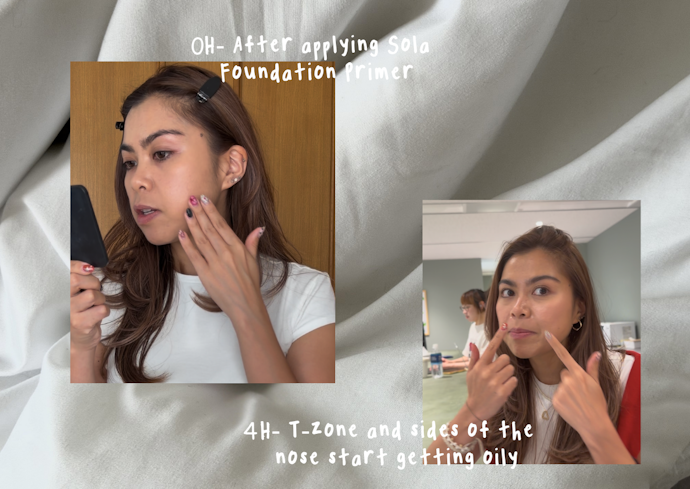
For most Filipinos, the first question before buying any base is simple: "nakaka oily ba?" Short answer: on oily-combination skin, Sola stayed fresh and glowy for about 4 hours before the T-zone needed a blot.
Now the fuller picture. It does not turn greasy right away, and when shine does show up, it lives at the sides of the nose, same on both test days. A quick blot brought it down without lifting the base, so it stayed wearable for a full 8 hours. Just do not expect a matte, no-touch-up finish. This is a glow-with-blotting base, not an all-day matte one.

A dewy or glowy finish isn't automatically a problem for oily or acne-prone skin. It really comes down to the overall formula and how your own skin reacts to it. That said, in our hot, humid climate, a dewy base can start looking oilier simply because sebum builds up on top of it as the day goes on.
Blotting is a fine way to manage that. Removing excess oil from the surface doesn't make your skin produce more oil afterward. Sebum production is driven more by hormones, genetics, and skin type than by anything you do to the surface.
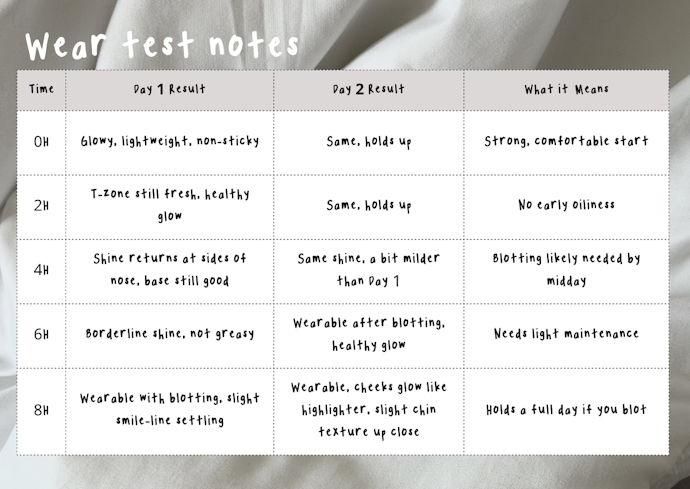
One thing we did not expect: on day 2, we used less product, and the oil control was actually a bit better while the coverage still held. It's great for makeup, but for sun protection, we had our thoughts, which we get into below.
If you're not applying enough of the product to hit the labeled SPF, use a regular sunscreen first, following the 2-finger rule, then treat the tinted primer as an extra layer of protection on top, not the main one.
The 3-in-1 Verdict: Great Tint, Decent Primer, Weak Sunscreen
As a Skin Tint: Great Coverage
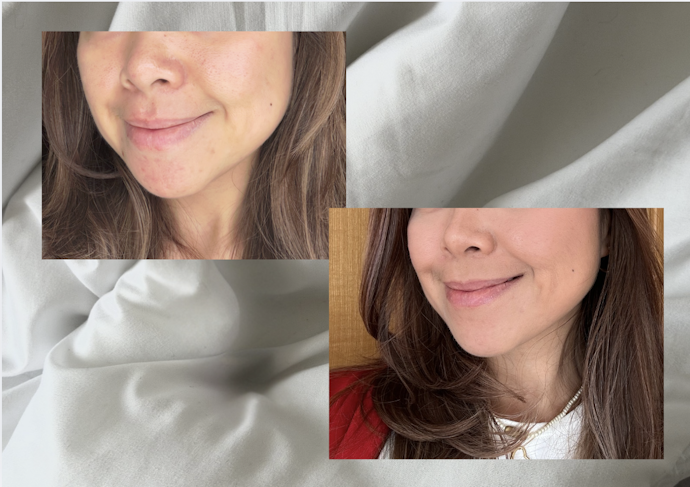
Sola works well as a skin tint if you want your skin to look polished without the heavy foundation look. It has a light-to-medium coverage that still looks natural when blended well. It did a good job of evening skin tone, making redness, blemishes, and spots less visible.
A little goes a long way. Because the coverage is quite noticeable, it may cling to dry patches or texture if the skin is not well-prepped.
Iron oxides are what give tinted products their color, and they also offer some added protection against visible light, which is particularly useful for anyone prone to pigmentation like melasma. They're generally well tolerated, including on acne-prone skin.
As a Primer: Light Smoothing, Not Pore-Blurring
As a primer, Sola gives light smoothing, but it is not a strong pore-blurring primer. It softened pores and texture without sinking into them, and concealer, blush, and powder layered on top without separating. By the 8-hour mark, though, there was slight settling along the smile lines.
As a Sunscreen: Not a Full Sunscreen Replacement
Sola is best described as a tinted base with SPF on the label, not as a sunscreen replacement that we can independently verify.
Because a small amount already gives visible coverage, we would be cautious about relying on it as the only sunscreen layer unless you can apply the proper amount evenly and reapply as needed. For this review, SPF50+ PA+++ is label-reported only, not lab-verified.
SPF 50 only delivers that level of protection if enough product is applied. The standard guidance is the 2-finger rule: two full lines of sunscreen along the index and middle fingers, for the face and neck. Most people don't apply a tinted primer that generously, so I'd still recommend a dedicated sunscreen underneath and treating the tinted primer as an added layer rather than a replacement.
If you are relying on it for real sun exposure, sunscreen should ideally be reapplied every 2 hours. Over makeup, that can mean touching up with an SPF product designed to go on top of a base, instead of reapplying the whole face.
Shade: Good Match After Settling, No Oxidation
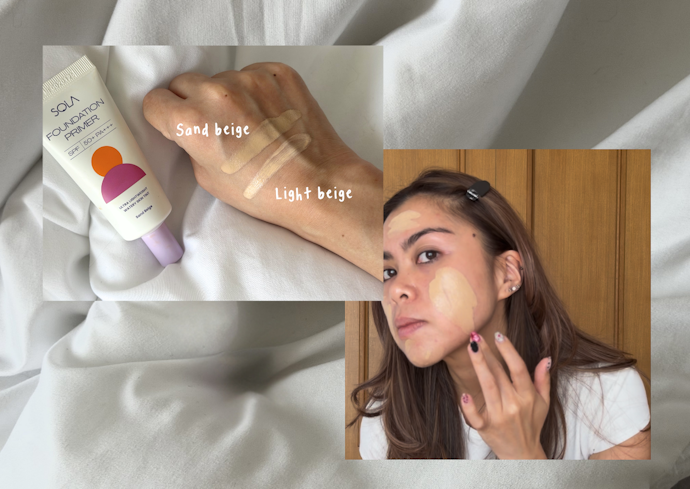
We tested Sand Beige. On both test days, the shade match held up well after settling. At first, Sand Beige looked like it might be dark, but once blended and settled, it matched well. There was no obvious white, grey, ashy, or orange cast, and no visible oxidation.
People often describe their skin as "turning acidic" when a base changes color through the day, but that's not really what's happening. What's usually called oxidation happens when the pigments and formula interact with air, heat, moisture, the skincare underneath, and the skin's own natural oils. Heat and humidity, like what we have here, can make that more noticeable.
If a shade doesn't match well, some people apply too little out of fear it will look heavy, or too much trying to correct the color, and both throw off even SPF coverage. What actually matters for sun protection is an even, adequate layer, not just picking the right shade.
Sola Foundation Primer Product Details
- SPF 50 PA+++ provides strong protection against UVA and UVB rays
- Tinted formula evens out skin and preps it perfectly for makeup
- Lightweight, non-comedogenic texture absorbs quickly without clogging pores
- Helps control oil and blur pores for a smooth finish
- Suitable for all skin types, including sensitive skin
Who Should Get It and Who Should Skip It
Get this if:
- You want an easy, glowy everyday base
- You like light-to-medium, natural coverage
- You have normal to oily-combination skin and do not mind blotting
- You want something you can apply fast with just your fingers
- You want a tinted base with SPF on the label for light, everyday sun exposure
Skip it if:
- You need full coverage or a matte, oil-control finish
- You have very oily skin and hate blotting
- You sweat a lot or wipe your face often (it is not transfer-proof)
- You have dry patches or texture you do not want emphasized by the end of the day
- You want a sunscreen you can fully rely on without a separate SPF layer
FAQ
Trying Sola Foundation for the first time? We answer some FAQs below.
Nakaka-oily ba ang Sola Foundation Primer?
Not right away. It looks fresh for the first few hours, but on oily-combination skin the sides of the nose started to shine around the 4-hour mark, so you will likely need to blot.
Does Sola Foundation Primer Oxidize?
In the Sand Beige shade, we did not see visible oxidation on either test day.
Is Sola Good for Oily Skin?
It is wearable on oily-combination skin for a full day, but it is not a matte oil-control base. Expect to blot the T-zone.
Can Sola Replace Your Sunscreen?
Only the label says SPF50+ PA+++, and we did not verify it. Because a thin layer already gives coverage, it is safer to treat it as a tinted base and layer a real sunscreen underneath for sun exposure.
Does It Last All Day? Is the 18-Hour Claim True?
We tested 8 hours, not 18. It stayed wearable for 8 hours with one blot. We cannot confirm the 18-hour claim, and the 4-hour shine makes us doubt it.
Can You Put Makeup Over It?
Yes. Concealer, blush, and setting powder all layered smoothly on top.
Is It Transfer-Proof?
No. There was visible transfer on tissue when we blotted, though the base did not lift with gentle blotting.
Remember: try not to rub the skin too much while blotting.
Will It Cause Breakouts or Clogged Pores?
According to Dr. Benett Gloriani, tiny bumps at the end of the day can come from a combination of oil, sweat, makeup, sunscreen, and other products sitting on the skin. It doesn’t automatically mean one ingredient is clogging your pores. For long-wearing or water-resistant products, she recommends double cleansing at night, especially for oily or acne-prone skin.