


10 Best Aircon Brands in the Philippines 2026 | Buying Guide Reviewed by Mechanical Engineer
Living in a tropical country has urged many Filipinos to seek out the best aircon brands in the Philippines. After all, what better way to fight the heat than with a blast of cold air! Unfortunately, the availability of so many brands can be confusing--even more so when considering what kind of unit to get, like window, portable, or inverter aircons.
That's where we come in! Below, we've compiled the top aircon brands in the Philippines as well as the product we recommend getting from themーbudget-friendly aircon brands included! There's also a buying guide with comments from Mechanical Engineer Khristofer Rea that you can check out, so you're fully informed for your next purchase.

A Mechanical Engineering graduate and currently a project manager. He has always been interested in the HVAC/R industry. His family also owns an air-conditioning business, where they supply airconditioners in commercial and industrial areas.

Our recommendation articles are carefully researched and crafted by the mybest Philippines team of writers and editors. To stay true to our company’s mission and vision to help users’ selection process easier, we also collaborate with experts from various fields to ensure that our content stays factual and useful.
The expert oversees the Buying Guide only, and does not determine the products and services featured.
Why You Can Trust Us
Every mybest article is crafted with hours of in-depth research and interviews with experts. Each month, we are continually expanding our database of products based on our research. By emphasizing user insight and reliable information, we deliver trustworthy content to readers.
How to Choose an Aircon Brand – Buying Guide
Here are some key points to consider:
- See if you fit the company’s target market
- Select a brand that matches your own values
- Check what features the brand is known for
- Choose a type according to your needs
- Match the cooling capacity to your room size
- Get the right horsepower to be energy-efficient
- To bring down your electricity bill, get an inverter aircon
For more detailed information, read through our buying guide below.
See if You Fit the Company’s Target Market

Unfortunately, companies often don’t have the time to cater to everyone’s needs. Instead, they carve out a niche in the market and focus on that. That’s why you see brands that are associated with wealthy folks and ones that are more budget-friendly.
Economic status is not the only thing to consider, though! Sometimes, companies also take into account buying habits like customers who prefer after-sale service or a one-time purchase. Regardless of the factors they consider, it’s best to make sure you fit their target market.

Air conditioning companies have different selections depending on the needs of their consumers. There are various models, which range from different price points.
Select a Brand That Matches Your Own Values

A company’s key values are what they promise to deliver to customers. Ideally, you’d want a company that shares or upholds principles you’re looking for. For instance, an environmentally-conscious person is best matched to a brand with the same standard.
Unfortunately, it’s easy for companies to say that they uphold values without actually doing so. As such, you may want to verify their claims by also checking customer reviews. It involves more work, but it’s better than blindly following a brand.
Check how the brands market their products. Some would focus on efficiency or spare parts availability, while some would focus on smart home integration
Check What Features Are Associated With the Brand
An established brand will usually have features its known for, whether it’s part of the product itself or part of their after-sales support. A more detailed explanation of these two are as follows:
Unique Propositions Are the Brand’s Specialization
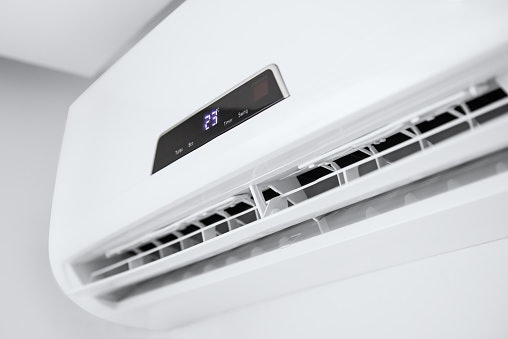
After years in the industry, some companies have begun to specialize in one aspect of air conditioners. For instance, Samsung has integrated new technologies, which you can see in their smart home integration. Meanwhile, other aircon brands may focus on energy efficiency, size, or even sustainability!
Essentially, a unique proposition is a brand's edge over its competitors. To keep this advantage, companies sometimes patent their innovations, making them the only company allowed to use that technology. That said, if you're looking at the top aircon brands in the Philippines, each brings something unique to the table. It's up to you to decide which you like best.
After-Sales Support Determine the Benefits You Get After Purchase
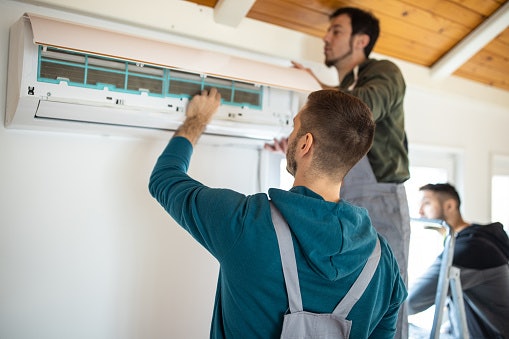
Like we said, some brands appeal to customers with after-sales support. These are goods or services that the company provides after buying the air conditioner. For example, brands like Daikin are known for multi-year warranties while others offer free installation services.
It’s wise to keep your receipt, though, if you plan on availing these after-sales services. While most companies will have their own records of your purchase, they will still likely need you to present paperwork for verification. As such, we suggest taking a picture of the receipt and proof of purchase, so you have backups.
Yes, Daikin is a good brand for after-sales, along with Carrier. We must also take note that apart from the service, spare parts availability is very important. These brands are known for that, especially in the Philippines.
Choose an Aircon Type According to Your Needs
Getting an aircon starts with the type you want, and there are three primary types to choose from. Each of these are designed to meet a certain need, meaning that they’re not interchangeable. That said, read on below to see the pros and cons of each.
Window-Type Air Conditioners Are Best for Those in a Budget
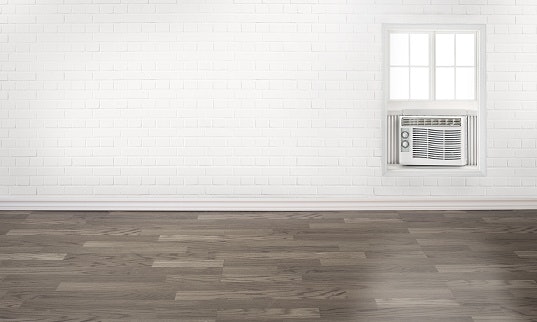
In the Philippines, window type aircons are loved for their simplicity. In fact, you don’t even need to hire a professional to install it! Just have a space carved in the wall to fit the device and use the included frame to fill in the gaps.
Their low price also makes them perfect for those on a budget. Just note that it has limited cooling abilities, so be sure that you check its cooling capacity and effective cooling area. In addition, these are also relatively loud machines. While you can lessen the sound by adding insulation around the unit, there will be a persistent hum every use.
Take note that air-conditioners have different capacities. The air conditioner capacity will depend on the size of the room and the number of furniture, appliances, and occupancy.
Split-Type Air Conditioners Cool Your House Efficiently

As the name suggests, a split type aircon is a unit that has one part indoors, and another one outside. Usually, the latter houses the noisy machinery like the compressor and condenser, leaving the indoors component free to generate cold air without being noisy.
These types also tend to be the most efficient in cooling as their wide bodies generate better airflow. Just note that because these are not plug-and-play, you might also need to hire a contractor to set it up, making these more expensive.
Usually, buying split-type airconditioners in appliance stores such as Abenson, include installation already. Do take note that the additional cost will come from additional materials, such as condenser coils. Although this is already included, if your outdoor unit is located far from the indoor unit, this is where you would need additional materials.
Portable Aircons Can Be Used With Minimal Setup
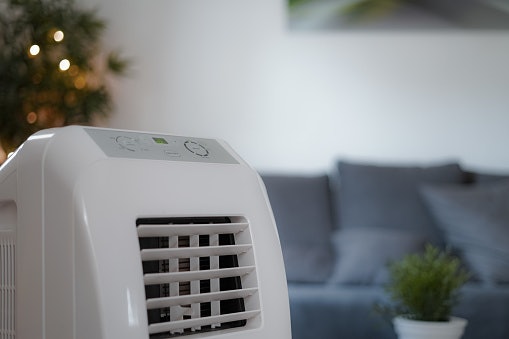
If you don’t have space on your walls, you may want to look at portable air conditioners. These houses all components into a compact unit that you place indoors. Some are even small enough to place on desks for better airflow! However, just because they’re portable doesn’t mean you can place them anywhere. Ideally, you still want them close to a window so you can route an exhaust tube outside.
In addition, you also want it in a place that’s easy to access. That's because portable aircons can't easily release condensation outdoors. Instead, it collects inside a built-in water tank which you’ll need to routinely empty if you don’t want to fry the unit.
Match the Cooling Capacity to Your Room Size

Cooling capacity is the main aspect you’d want in an air conditioner; this is how much heat it can remove per a specified time. Often, British Thermal Unit (BTU) is the used measurement, though you might also come across kilojoules per hour when shopping. For easier comparison, though, the products we have listed above have already been pre-converted.
You also want to scale your aircon’s cooling according to the size of your room . After all, it's inefficient to get a high-cooling machine when a moderate one will do. Unfortunately, there is no definite scale for this but a good estimate is to get a BTU that is 500 times larger than your room size. For example, a room of 100 square meters requires 5,000 BTUs to be fully cooled.
Air conditioning capacity is commonly measured in kW or HP in the Philippines. There is a rule of thumb for air conditioning capacity, but it is better to understand the heat load generated inside the room. This includes the space, height of the room, number of windows, appliances, no. of people, no. of lights, apart from other parameters.
Get the Right Horsepower to Be Energy-Efficient
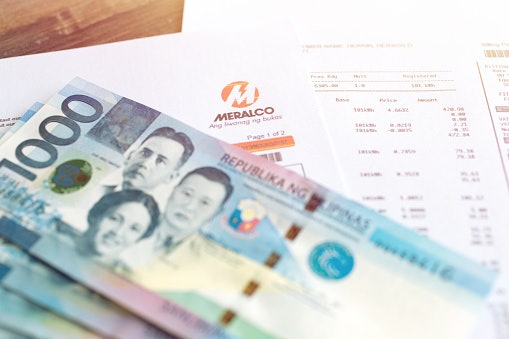
A common mistake among new aircon buyers is getting a unit that has the wrong horsepower for the room they want to be cooled. This results in inefficient use of energy that can bring your electricity bill up. In fact, according to Meralco, the wrong horsepower can cost you an extra 956 pesos per month.
While the best way to determine your optimal horsepower is to get a contractor, not everyone has that privilege. If you want to do it yourself, the next best estimate is to get a 0.5 horsepower for rooms less than 11 square meters. Then, for every five square meters, add 0.25 horsepower.
To Bring Down Your Electricity Bill, Get An Inverter Aircon
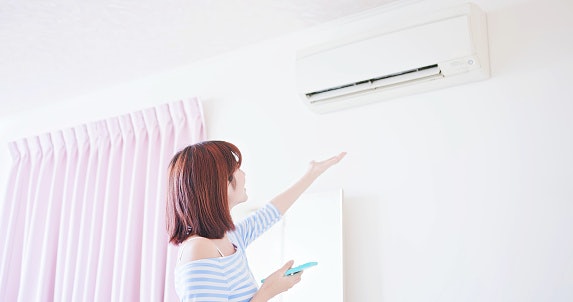
Simply put, an inverter controls how much power your air conditioner consumes according to the temperature of the room. For instance, once it detects that it reached the desired coolness, it maintains this temperature by switching to a lower speed and only ramps up once the room heats up again. If you’re worried about a high electricity bill, you can save up to 10,000 php per month with inverter models.
However, to properly use this feature, the air conditioner must be used continuously. For instance, using the unit for 8 hours straight rather than four 2-hour sessions. With the former, the room is cooled once and will operate in low-power for the remaining hours. Meanwhile, the latter will use high power to cool the room for every session the unit is turned on, thus consuming more electricity.
10 Best Aircon Brands to Buy Online
| Products | Image | Click to purchase | Popularity | Details | ||||||
|---|---|---|---|---|---|---|---|---|---|---|
Type | Cooling Capacity | Horsepower | Inverter | After-Sale Support | Dimensions | |||||
1 | 1.0 HP Wall Mounted Split Type D-Smart Series Inverter |FTKQ25BVA Daikin |  | No.1 | Split | 9,000 BTU | 1 HP | 21.3 x 73 x 28 cm | |||
2 | 2.0 HP Air Conditioner S-Inverter |AR50H18D1EHNTC Samsung |  | No.2 | Split | 19,000 BTU | 2 HP | unknown | |||
3 | Celest Full DC Inverter Split-Type Air-Conditioner R32 Refrigerant Midea |  | No.3 | Split | 9,500 BTU | 1 HP | 27 x 80 x 78 cm | |||
4 | 1.0 hp Window Type Inverter Air Conditioner |WCARH009EEVC2 Carrier |  | No.4 | Window | 10,000 BTU | 1 HP | 47 x 33 x 59.6 cm | |||
5 | 0.6 HP Inverter Grade Window Type Aircon |WAR-632IGT2 Fujidenzo |  | No.5 | Window | 6,000 BTU | 0.6 HP | 30.6 x 40.6 x 39 cm | |||
6 | HSU-25PSV32 Haier |  | No.6 | Split | 22,748 BTU | 2.5 HP | 22 x 97.5 x 31.5 cm | |||
7 | Full DC Inverter Window 1 HP Aircon |AW09TR5RF Hisense |  | No.7 | Window | 9,000 BTU | 1 HP | 59.5 x 56 x 43 cm | |||
8 | 1.5 HP Inverter Window Type Aircon Everest |  | No.8 | Window | 13,080 BTU | 1.5 HP | 34.2 x 55.8 x 48.7 cm | |||
9 | Split Type AC |TAC-19CSD TCL |  | No.9 | Split | 19,000 BTU | 2 HP | unknown | |||
10 | 1.5 HP Window Type Dual Inverter Compressor Aircon with Kilowatt Manager |LA150GC2 LG |  | No.10 | Window | 12,000 BTU | 1.5 HP | unknown | |||

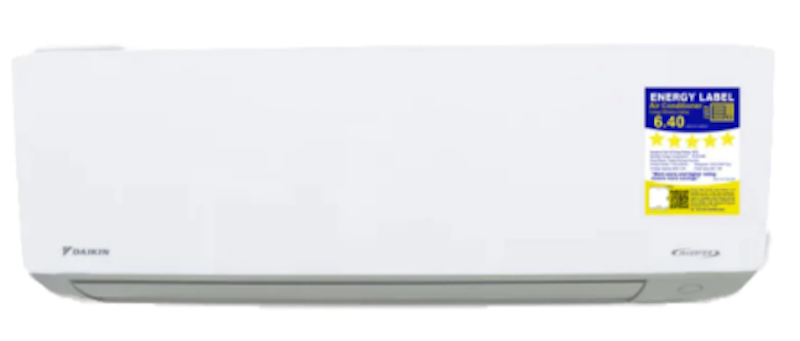
Daikin 1.0 HP Wall Mounted Split Type D-Smart Series Inverter | FTKQ25BVA
Reviews mention:
Shopee and Lazada users highlight rapid cooling and quiet operation even at night. Many value the eco-mode for lower electricity bills during hot Philippine summers. Some suggest including a longer pipe option for more flexible installations.
| Type | Split |
|---|---|
| Cooling Capacity | 9,000 BTU |
| Horsepower | 1 HP |
| Inverter | |
| After-Sale Support | |
| Dimensions | 21.3 x 73 x 28 cm |
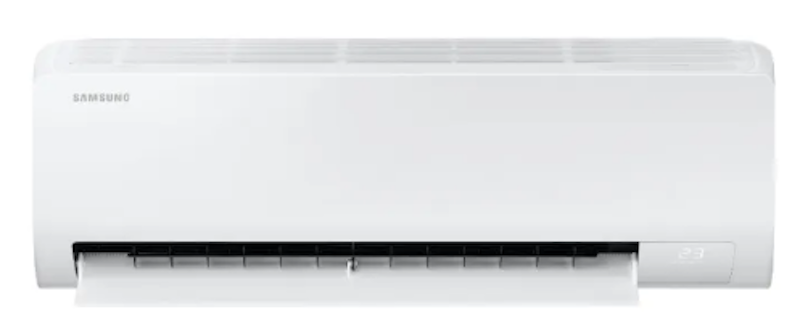
Samsung 2.0 HP Air Conditioner S-Inverter | AR50H18D1EHNTC
Reviews mention:
Many customers celebrate its rapid cooling for family living rooms during humid nights. Some highlight significant electricity savings compared with older units. Some recommend professional installation to maximize pipe flexibility.
| Type | Split |
|---|---|
| Cooling Capacity | 19,000 BTU |
| Horsepower | 2 HP |
| Inverter | |
| After-Sale Support | |
| Dimensions | unknown |
Midea Celest Full DC Inverter Split-Type Air-Conditioner R32 Refrigerant

Reviews mention:
Shoppers notice rooms cool down faster than basic models. The quiet fan rarely disturbs movie nights or work calls. Some suggest using a voltage stabilizer during brownouts.
| Type | Split |
|---|---|
| Cooling Capacity | 9,500 BTU |
| Horsepower | 1 HP |
| Inverter | |
| After-Sale Support | |
| Dimensions | 27 x 80 x 78 cm |
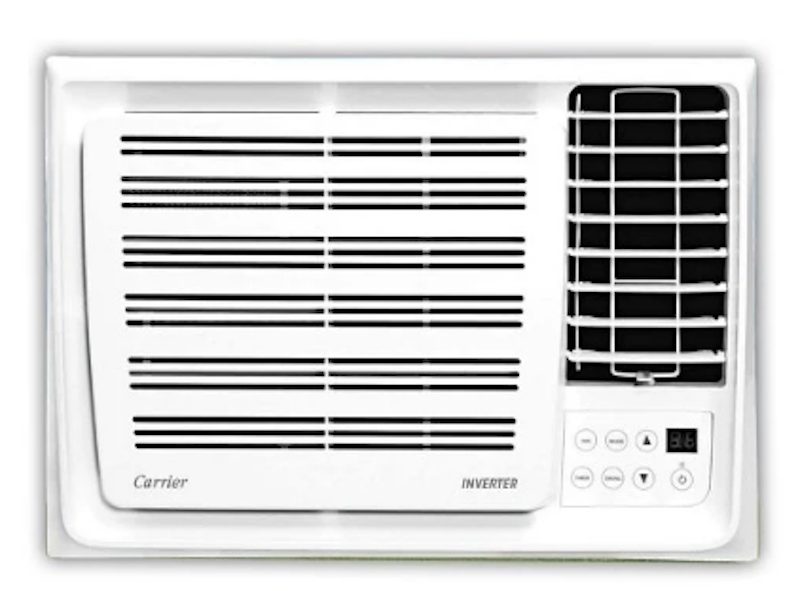
Carrier 1.0 hp Window Type Inverter Air Conditioner | WCARH009EEVC2
Reviews mention:
Buyers praise its low electricity bills compared with non-inverters. Many appreciate the easy window installation and quiet operation at night. Some mention occasional filter checks for peak performance.
| Type | Window |
|---|---|
| Cooling Capacity | 10,000 BTU |
| Horsepower | 1 HP |
| Inverter | |
| After-Sale Support | |
| Dimensions | 47 x 33 x 59.6 cm |
Fujidenzo 0.6 HP Inverter Grade Window Type Aircon | WAR-632IGT2

Reviews mention:
Users love how it turns cramped boarding rooms into cool retreats. The remote’s timer function is handy for students managing study schedules. A few suggest tilting slightly during heavy rains to prevent water buildup.
| Type | Window |
|---|---|
| Cooling Capacity | 6,000 BTU |
| Horsepower | 0.6 HP |
| Inverter | |
| After-Sale Support | |
| Dimensions | 30.6 x 40.6 x 39 cm |

Reviews mention:
Buyers celebrate how large living rooms feel comfortable within minutes of startup. The eco function noticeably reduces monthly bills during extended use. Several mention appreciating the self-clean cycle for low-maintenance operation.
| Type | Split |
|---|---|
| Cooling Capacity | 22,748 BTU |
| Horsepower | 2.5 HP |
| Inverter | |
| After-Sale Support | |
| Dimensions | 22 x 97.5 x 31.5 cm |
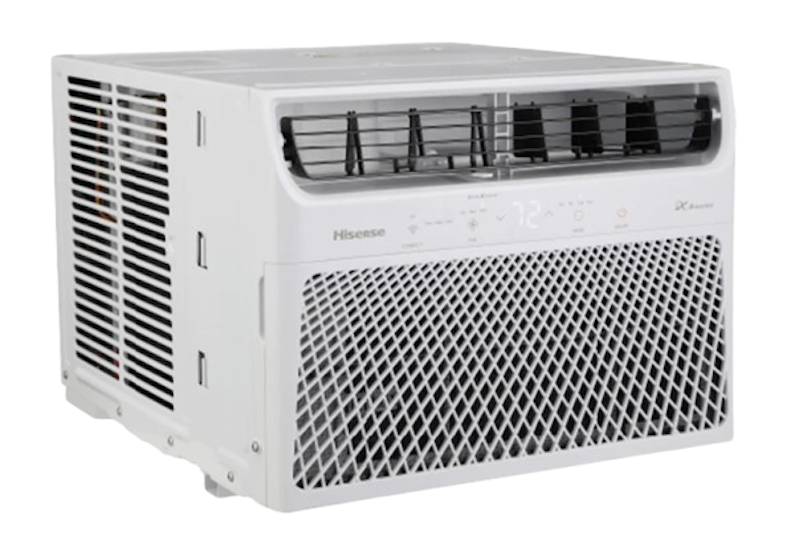
Hisense Full DC Inverter Window 1 HP Aircon | AW09TR5RF
Reviews mention:
Shopee customers find it ideal for apartments where space is limited. The 24-hour timer is useful for unpredictable work shifts. Most agree monthly bills drop significantly after switching from non-inverters.
| Type | Window |
|---|---|
| Cooling Capacity | 9,000 BTU |
| Horsepower | 1 HP |
| Inverter | |
| After-Sale Support | |
| Dimensions | 59.5 x 56 x 43 cm |
Everest 1.5 HP Inverter Window Type Aircon

Reviews mention:
Buyers rave about cooling medium-sized home offices without spiking electric bills. Remote access is invaluable when forgetting to turn off before leaving home. Technophiles enjoy monitoring real-time usage through the app.
| Type | Window |
|---|---|
| Cooling Capacity | 13,080 BTU |
| Horsepower | 1.5 HP |
| Inverter | |
| After-Sale Support | |
| Dimensions | 34.2 x 55.8 x 48.7 cm |

Reviews mention:
Many highlight significant electricity savings during extended hot seasons. The whisper-quiet sleep mode rarely wakes light sleepers even on high settings. Tech enthusiasts praise app-based scheduling for work-from-home productivity.
| Type | Split |
|---|---|
| Cooling Capacity | 19,000 BTU |
| Horsepower | 2 HP |
| Inverter | |
| After-Sale Support | |
| Dimensions | unknown |
LG 1.5 HP Window Type Dual Inverter Compressor Aircon with Kilowatt Manager | LA150GC2

Reviews mention:
Shopee reviewers highlight stable performance despite apartment voltage swings. Night shift workers rely on the 24-hour timer for pre-cooled rooms upon arrival. Office setups benefit from energy monitoring that keeps bills predictable.
| Type | Window |
|---|---|
| Cooling Capacity | 12,000 BTU |
| Horsepower | 1.5 HP |
| Inverter | |
| After-Sale Support | |
| Dimensions | unknown |
Frequently Asked Questions Answered by Khristofer Leo Rea
Below are some of the most asked questions on the web answered by Khristofer Leo Rea.
What Aircon Brand Is the Best?
The best and trusted aircon brands in the Philippines include Carrier and Daikin. These brands have good after-sales service, plus they usually have supplies for spare parts.
Is It Safe to Leave My Aircon on All Day?
Modern aircons have built-in insulation to meet the demands of prolonged use. However, while they're safe to be left on the whole day, expect your electricity bill to be significantly higher--especially with non-inverter units.
How Often Should I Clean the Air Filters?
Aircon filters need to be cleaned often. Best to do this every two weeks!
Get Better Cooling With These Tips
Having some trouble with your aircon? Perhaps our tips below can help you easily solve that!
Where Is the Best Place to Mount an Aircon?
It depends on the type of aircon you use. For instance, split types are best placed 2 to 3 feet below the roof while window aircons are best mounted 3 to 4 feet above the floor. You also want to place your device on north- or south-facing walls to get better cooling. This is because this orientation faces opposite the sun's route, so the aircon isn't exposed to direct heat during use.
Why Is My Aircon Not Cooling?
There are many reasons why an aircon is not cooling properly. In most cases, all you need to do is clean the filters as dust buildup may have hindered airflow. More technical problems like a leaking refrigerant, a busted coil, or a broken thermostat may require professional help.
Spruce Up Your Home With These Other Appliances
Getting an aircon is only one of the steps in achieving your dream home; there are other factors to consider like entertainment, food storage, and the like. So why not stick around? Click on the links below and we'll take you to some products that may give you an idea what to get in the future.


Author: Dane Lozano
Editor: I. Honda
How We Chose and Ranked Our Product Recommendations
Our buying guide was carefully researched and crafted by the mybest team of writers and editors. We used the buying guide as a basis for choosing and ranking the product recommendations, and we looked at reviews and ratings from different E-commerce sites like Lazada, Shopee, and more.
The descriptions of each product are referenced from content available on manufacturer, brand, and e-commerce sites.